
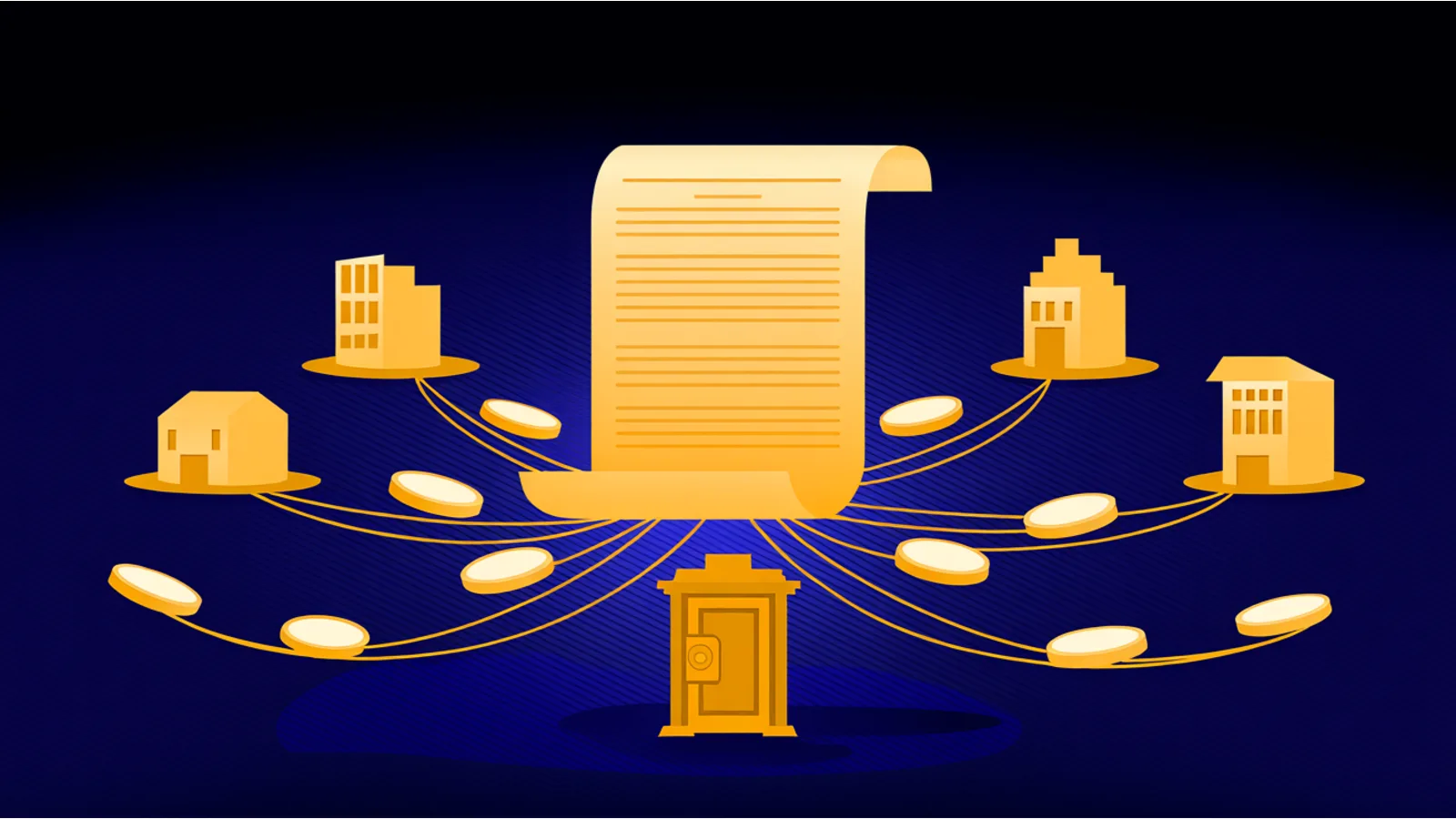
Built to Be Bought argued that the real money in this business is not salary, it is equity: the fund's stake, the carried interest, the director shares, the appreciation. That is usually invisible, locked inside private funds. But when a private equity firm takes a portfolio company public, the equity stops being private. It gets written down, share by share, in SEC filings that anyone can read. AE Industrial Partners has taken four of its companies public, which means the machine Built to Be Bought described is, for once, on the record. This post reads the filings.
Public and private, and why REDLattice is not in here
Only some of the firm's companies are visible this way. The public, SEC-reporting ones are BigBear.ai (BBAI on the New York Stock Exchange), Redwire (RDW), Firefly Aerospace (FLY on Nasdaq), and, since January 2026, York Space Systems (YSS). Everything else the firm owns is private and files nothing about its ownership: there is no SEC registrant at all for REDLattice, Calca Solutions, or Belcan, and companies like Sierra Space and ThayerMahan appear in EDGAR only through private-placement notices, never insider ownership. So if you went looking for the firm's REDLattice equity in the SEC filings, you would not find it. That stake is held privately, through the funds, as carried interest and co-investment. The public companies are the window; the private ones stay dark.
The stake is the story
Start with the size of the positions, because that is where the money actually lives. When BigBear.ai went public through a SPAC in December 2021, AE's holding company reported owning 105,000,000 shares, or 77.5 percent of the company. When Redwire went public through a SPAC in September 2021, AE reported 39,200,000 shares, or 64 percent. When Firefly Aerospace filed to go public in 2025, its prospectus showed entities affiliated with AE holding 58,818,886 shares, or 47.4 percent before the offering. These are controlling or near-controlling positions in companies worth hundreds of millions to billions of dollars. A slice of the gain on a position that size is what a private equity fund exists to earn, and it dwarfs any salary or board fee. The stakes are held through fund vehicles, AE Industrial Partners Fund II and its parallels, with voting power resting in the firm's managing partners Michael Greene and David Rowe.
The tell: whose equity flows back to the firm
Here is the detail the filings expose that a pitch deck never would. AE puts its people on these boards, and those directors are paid the same way any public-company director is paid, in cash and restricted stock. But the AE filings show a split. The directors who are AE employees do not keep their board pay. At Redwire, the 2026 proxy states plainly that managing partner Kirk Konert and Michael Greene have, by assignment, transferred all of their board fees and restricted stock units to AE Industrial Partners. Konert's 2025 board compensation of 277,503 dollars and Greene's 197,258 dollars flow to the firm, not to them. The same arrangement appears at BigBear.ai, where the proxy says two AE-affiliated directors transferred all of their RSUs to AE Industrial Partners.
The operating partners are treated differently, and it is worth seeing. At BigBear.ai, the same proxy shows Pamela Braden holding 226,413 shares in her own name, Peter Cannito 210,217, and Paul Fulchino 171,931, each granted the standard annual director award of 55,556 RSUs worth about 130,000 dollars. At Redwire, chairman and chief executive Peter Cannito holds 905,378 shares in his own name, including options on 470,000. In other words, the firm's own staff route their director equity to the firm, while the operating partners and executives keep theirs as personal holdings. Both are ways to get paid in equity. The filings just let you see which pocket each share lands in.
One more human detail the filings catch: in June 2024, with BigBear.ai trading around a dollar and a half, Braden did not sell. She bought, 140,939 shares on the open market at 1.49 dollars, raising her direct stake to 446,396 shares. A director buying her own company's stock in the open market is the clearest conviction signal a filing can contain.
The machine in a single move
The best illustration of the roll-up in Built to Be Bought is a transaction AE ran entirely between companies it controlled. In June 2025, Redwire acquired the drone maker Edge Autonomy for 925 million dollars, made up of 160 million in cash and about 765 million in stock, which was 49,764,847 new Redwire shares. AE controlled both sides. It owned Redwire, the buyer, and it owned Edge Autonomy, the seller, a fact the merger proxy discloses as a related-party transaction. So the firm sold a company it owned to another company it owned, took most of the price in stock, and its Redwire stake jumped to a peak of 101,656,136 shares, or 71.1 percent. That is a platform absorbing a tuck-in and the sponsor rolling its equity forward, done in the open, on one 8-K. The firm had done the same thing a year earlier when its portfolio company Pangiam was bought by BigBear.ai.
Harvesting: how the stake becomes cash
A stake is only paper until it is sold, and the filings show the harvest too. At BigBear.ai, AE's original founder block sold all the way down: the final amendment to its filing states that, effective December 26, 2024, that entity had ceased to own any shares. But that was not a clean exit. The very same filing shows AE still held about 25.7 percent of BigBear.ai through a second vehicle it received in the Pangiam deal, and it kept filing sale reports into 2025 and 2026. At Redwire, the arc is just as clear: from that 71.1 percent peak in mid-2025, AE's stake fell to 24.3 percent by March 2026 as Redwire issued new shares and AE sold into a rising market. Selling a control stake all at once would crater the price, so the firm feeds it out over years. The dozens of routine sale notices are the sound of a fund returning money to its investors.
You can even see the whole operation from one filer. AE's umbrella insider entity, AeroEquity GP, LLC, has filed more than a hundred forms with the SEC since 2021, spanning Redwire, BigBear.ai, Firefly, and York Space Systems. That single EDGAR record is the paper trail of the machine.
Why this makes more, not less
Add it up and the answer to how these people make money is not the salary and not even the board fees. It is the fund's stake in companies worth billions, taxed as a capital gain rather than as wages, plus co-investment, plus the director equity the firm captures from its own people, plus the appreciation as the platforms grow and absorb tuck-ins. The tax side, covered in Built to Be Bought, quietly favors the whole structure, because carried interest and rolled equity are taxed at capital-gains rates and deferred rather than paid as ordinary income. The salary is the smallest number in the story. The filings show you the big ones.
Related reading
- Built to Be Bought: the machine these filings document, and the tax treatment underneath it.
- Peter Cannito, who tripled Polaris Alpha and now runs Redwire: the operating partner on both sides of the Edge Autonomy roll.
- Why a National-Security Investor Sits in Boca Raton, Not the Beltway: where the firm doing all this actually sits.
- One Playbook, Many Starting Hands: how a founder gets onto the first rung of the same ladder.
Fact-check notes and sources
- Which AE portfolio companies are public versus private: the public filers are BigBear.ai (CIK 1836981), Redwire (CIK 1819810), Firefly Aerospace (CIK 1860160), and York Space Systems (CIK 2086587); REDLattice, Calca Solutions, and Belcan have no EDGAR registrant; Sierra Space and ThayerMahan file only private-placement Form D notices.
- AE's ownership at each company: BigBear.ai 105,000,000 shares / 77.5 percent at the December 2021 SPAC close (Schedule 13D); Redwire 39,200,000 / 64 percent at the September 2021 close (Schedule 13D); Firefly 58,818,886 / 47.4 percent before the IPO and 58,805,747 / 40.9 percent after (IPO prospectus). Firefly's IPO priced on August 6, 2025 at 45 dollars a share and began trading August 7.
- Director equity and the assignment mechanic: AE-employee directors Kirk Konert and Michael Greene assigning their Redwire board fees and RSUs to AE Industrial Partners, and their 2025 totals of 277,503 and 197,258 dollars (Redwire 2026 proxy); the parallel RSU assignment at BigBear.ai and the director share counts and 55,556-RSU annual grant (BigBear.ai 2024 proxy); Peter Cannito's 905,378 Redwire shares (Redwire 2026 proxy); Pamela Braden's June 2024 open-market purchase of 140,939 shares at 1.49 dollars (Form 4).
- The Edge Autonomy related-party transaction: the 925 million dollar consideration (160 million cash plus 49,764,847 Redwire shares) in the closing 8-K, the related-party disclosure in the merger proxy, and AE's resulting 71.1 percent peak (Schedule 13D/A, June 2025).
- The sell-down: BigBear.ai founder block to zero effective December 26, 2024 while AE retained about 25.7 percent through another vehicle (final BigBear.ai Schedule 13D/A); Redwire down to 24.3 percent by March 2026 (Schedule 13D/A No. 16); AE's umbrella filer AeroEquity GP, LLC and its 100-plus filings (EDGAR submissions).
- Carried interest and rolled-equity tax treatment: as sourced in Built to Be Bought. The specific carried-interest percentages and co-investment allocations for AE's funds are private and are not disclosed in any SEC filing; this post reports only what the public filings state and does not estimate the funds' private economics.
This post is informational and journalistic, describing publicly filed SEC documents and reported transactions. It is not investment, tax, legal, or M&A advice, and nothing here is a recommendation to buy or sell any security. All companies and individuals are discussed from public records and their own filings as nominative fair use, with no affiliation implied and nothing endorsed by them.
