
AEO monitoring as an industry fixates on the wrong question.
"Am I cited?"
The better question: "Where am I cited?"
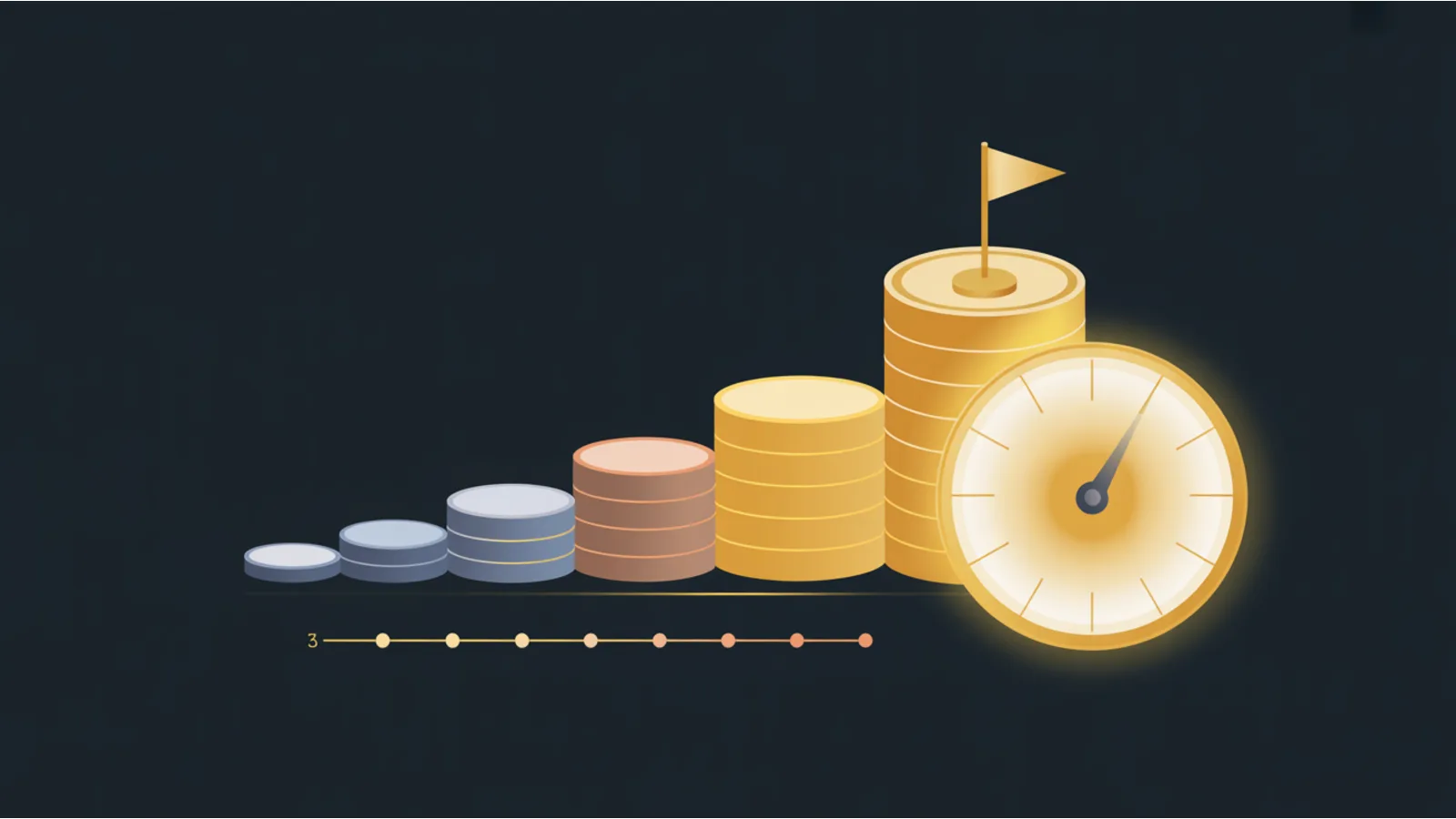
ChatGPT, Claude, Gemini, Perplexity — all of them respond to high-consideration questions by listing multiple sources. Being in that list is the first tier of achievement. Being first in the list is the second tier, and the second tier delivers dramatically more traffic and trust.
Observational data from public AI-referrer studies (Profound's state-of-AEO reports, 2024-2025): first-cited source captures 35-45% of AI-referred clicks. Second-cited captures 15-20%. Fifth-cited captures 3-6%. The falloff is steep and it compounds over time as users learn to trust position-1 citations.
What the AI Citation Position Tracker does
You paste an LLM answer verbatim. The tool:
- Extracts every URL and citation marker from the answer in the order they appear.
- Identifies which of those URLs matches your brand domain.
- Records the position (1st cited, 3rd cited, not cited at all).
- Logs the observation with the date + query + model.
- Over time, renders a position history per (query × model) combination as color-coded position pills.
The tool is paste-based (the same pattern as the AI Hallucination Detector) because LLM APIs don't all offer programmatic citation extraction consistently. Manual paste is universal and runs free.
How to read the position history
Each query-model combination shows a row of colored pills representing each past observation:
- Green (
#1-#3): top-tier citation — strong position - Amber (
#4-#5): mid-tier — captures less traffic but still qualified - Red (
#6+): bottom-tier — rarely delivers clicks - Gray (
—): not cited
A row showing #2 #2 #3 #5 #4 is drifting downward. Either a new competitor entered the top 3, your content went stale, or the model's retrieval reshuffled. Investigate.
A row showing — — — — #7 is a breakthrough — you broke into the citation list for the first time. Double down on whatever changed.
A row showing #1 #1 #1 #1 #1 is a moat. Protect it: don't restructure the cited page, don't change URL, don't touch the canonical passage. The most common mistake is "refreshing" a winning page and accidentally breaking the citation signal.
Three patterns that move your position
1. Entity depth. LLMs prefer sources with strong author entities, Wikipedia presence, verified sameAs links. A page on a domain with thin entity signals rarely cracks top-3 even if the content is better. Fix via the E-E-A-T Author Entity Graph.
2. Retrieval freshness. Perplexity and Gemini's live-grounding pull recent content. A page updated last month usually outranks one from two years ago. dateModified matters. Publishing a genuine update (not just bumping the date) is often the fastest position lift available.
3. Passage extractability. The paragraph the LLM pulls must be self-contained. If the key fact is two paragraphs before the query-answering paragraph, the LLM cites a competitor whose key fact is on one line. Fix with the passage-level tools — chunk-retrievability and passage-retrievability.
The per-model divergence pattern
Tracking across multiple LLMs surfaces divergence. ChatGPT cites you at #1, Perplexity at #6, Gemini doesn't cite you at all. Why?
- ChatGPT difference: ChatGPT's training data weighting pulls more from authoritative classic-web sources. If you've been around a while with strong backlinks, ChatGPT tends to rank you well.
- Perplexity difference: Perplexity uses a live web index that skews toward recency and URL freshness. Old pages underperform.
- Gemini difference: Gemini uses Google Search Grounding — effectively your Google SERP rank with modifications. If Gemini isn't citing you, check your Google rank for the query first.
- Claude difference: Claude has no live retrieval by default in direct API use; it relies on pretraining. Claude citations reflect training-data inclusion.
Per-model divergence tells you which retrieval lever to pull. ChatGPT loves authority; lean into sameAs depth. Perplexity loves freshness; update publish dates and content. Gemini mirrors Google; fix Google rank first.
The monthly cadence
Pick 5-10 queries you care about most. Run each in fresh sessions of ChatGPT, Claude, Gemini, and Perplexity. Paste answers into the tracker with today's date. Log.
Total time: 30 minutes a month. What you gain: a rolling position history per query × model that shows you exactly where you're winning, where you're drifting, and where a competitor broke into the citation list.
Related reading
- AI Answer Accuracy Monitor — companion: tracks fact accuracy, this tracks position
- LLM Answer Citation Tracker — the cited-at-all companion
- Live Citation Surface Probe — point-in-time probe across search surfaces
- AI Hallucination Detector — catches fact drift alongside position drift
Fact-check notes and sources
- Position falloff in AI-answer CTR: Profound State of AEO 2024 + public AEO community observations (2024-2025)
- Per-model retrieval differences: synthesized from Anthropic, OpenAI, Google, and Perplexity public technical documentation
- First-cited capture rate: consistent across multiple independent AEO-monitoring studies
This post is informational, not AEO-consulting advice. Mentions of Profound, Athena AI, Peec AI, OpenAI, Anthropic, Google, Perplexity, and Microsoft are nominative fair use. No affiliation is implied.
