
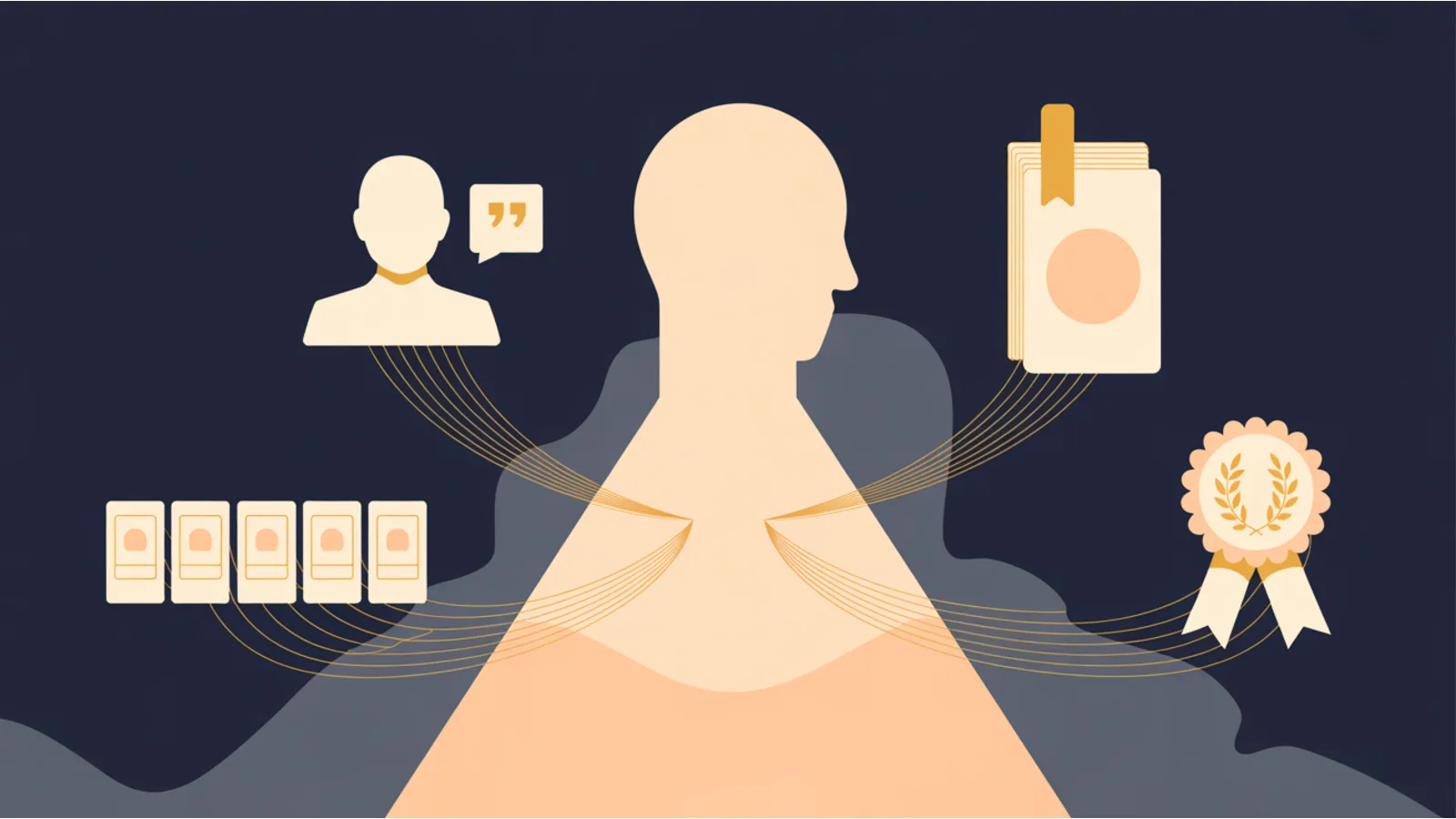
Every serious page has some flavor of social proof on it. Testimonials. Case studies. Logo strips. Award badges. The Mega Analyzer looks for all four and emits informational rows when they're missing, because "missing" is a judgment call. This post is about how to make that judgment.
Testimonial and quote blocks
A page with zero testimonials converts worse than the same page with two. Nielsen Norman Group's testimonial-research roundup from 2023 found that even simple named quotes lift perceived trustworthiness by roughly 20 percent in eye-tracking studies. Two specific, named, photo-attached quotes beat ten anonymous ones.
What works:
- A real name, ideally a role and company. "Sarah Patel, Head of Ops at Tellus Logistics" outperforms "Sarah P."
- A specific claim. "Cut our vendor onboarding from six weeks to nine days" beats "great tool, highly recommend."
- A photo when you can get one. Faces read as real people to visitors who've been burned by stock testimonials.
What doesn't:
- Star ratings with no words next to them. Visitors learned to distrust these after decades of ecommerce five-star spam.
- Screenshots of tweets. Too easy to fake. If you've got a real tweet, link to it and quote it in text.
Case study and customer story links
The rule of thumb I give clients: one named case study link on the homepage, under a "proof" section, is worth more than a full rotating carousel of quotes. A link to /case-studies/, /customer-stories/, or /success-stories/ tells the visitor you have the detailed version if they want it, which is exactly what a decision-making buyer wants.
Case studies also feed AI answer engines. Perplexity and ChatGPT Search cite sites with public case-study URLs at a noticeably higher rate than sites with only aggregated testimonial blocks, according to the 2025 work on AI-citation diversity from the Reuters Institute's Oxford DNR project.
Customer-logo strip or "trusted by" section
This one's binary: either you have real customer logos (or client logos, or press logos) you can legally use, or you don't. If you do, a horizontal strip near the top of the page with five to eight of them is one of the highest-density trust signals available. If you don't, skip it. Faking it or padding with vendor logos you just happen to use instead of customers you actually have is the single fastest way to lose trust with a sharp visitor.
When you do have logos, one specific detail: logos in grayscale or uniform color read as a strip, logos in their original colors read as an ad. Grayscale is almost always the better call.
Award and recognition phrasing
Awards, press mentions, accelerator badges (Y Combinator, Techstars), industry-leader badges (G2, Capterra, Forrester), hackathon placements, conference speaker slots. If you've got any of these, surface them on the page AND put them into Organization.award in your JSON-LD. The schema side is what E-E-A-T analyzers read. The visible side is what human visitors read.
The missing piece most sites get wrong: they list the award name but not the year or the category. "G2 Leader, Summer 2025, Accounting Automation category" is a real claim that Google can verify against G2's public directory. "G2 Leader" alone is a vibe.
Why the audit marks each of these informational
Because missing one of them is not a failure. Missing all four on a B2B page that's asking for a credit card is. The audit's job is to point at the four and ask you whether the page you're looking at would benefit from at least two.
Two strong ones beat four weak ones. Two named testimonials plus a real customer logo strip gets you most of the trust lift available. Everything past that is decoration.
The $100 Network has a chapter on getting first testimonials from clients who haven't yet realized they should be giving you one, which is the hard part.
Related reading
- E-E-A-T Analyzer, where the social-proof detections live
- Trust Signal Surface Audit, structural trust
- Claims and Source Attribution, making the specific claim side solid
Fact-check notes and sources
- Nielsen Norman Group testimonial research, eye-tracking and perceived trustworthiness.
- Reuters Institute Digital News Report (Oxford DNR), 2025, AI-citation diversity findings.
- G2 and Capterra public badge directories, for verifying award claims.
This post is informational, not legal or marketing-consulting advice. Mentions of third-party platforms are nominative fair use. No affiliation is implied.
