
BYD outsold Tesla globally in Q1 2026. The cars are good. The pricing undercuts every Western competitor. The technology, particularly the God's Eye ADAS system, ships standard features that Tesla charges extra for. If you're shopping for an EV on spec sheets alone, BYD wins on value.
But there's a second spec sheet most buyers never read. The data one. And what's on it should matter to anyone who treats their car as something other than a phone on wheels.
What the technology actually does
BYD's God's Eye system ships on every new model. Hardware: 12 cameras, 5 millimeter-wave radars, and 12 ultrasonic sensors. That's the full sensor suite on the base trim. No paid upgrade. No subscription unlock. Tesla's equivalent setup requires Autopilot or FSD, with Full Self-Driving Supervised running $99 per month or a one-time purchase.
The feature comparison matters:
| Feature | BYD God's Eye | Tesla Autopilot / FSD |
|---|---|---|
| Sensor approach | Cameras + LiDAR + radar + ultrasonic | Camera-only (Tesla Vision) |
| Standard on base trim | Yes | Autopilot standard; FSD extra |
| Autonomous parking | Level 4 (unattended, no pre-mapping) | Smart Summon (supervised, mapped) |
| AEB activation speed | As low as 2.5 mph | "Good" IIHS rating up to 43 mph |
| Pedestrian/cyclist detection | Standard | Standard |
| Liability guarantee on parking | Yes, BYD covers damage | No equivalent guarantee |
| Monthly cost | $0 | FSD: $99/month |
BYD's Level 4 autonomous parking is the standout. The car navigates parking lots, chooses spaces, and parks without the driver in the vehicle. If the system damages anything during an unattended parking maneuver, BYD has stated they cover it. Tesla's Smart Summon requires the driver to be nearby and doesn't offer a damage guarantee.
On highway driving, Tesla's FSD is further along. It handles urban intersections, unprotected turns, and complex traffic patterns more aggressively. BYD's system is more conservative, preferring safety over speed. Whether that's a feature or a limitation depends on your tolerance for autonomous systems making bold moves in traffic.
As of early 2026, over 1 million BYD vehicles in China had received the God's Eye update.
The data problem
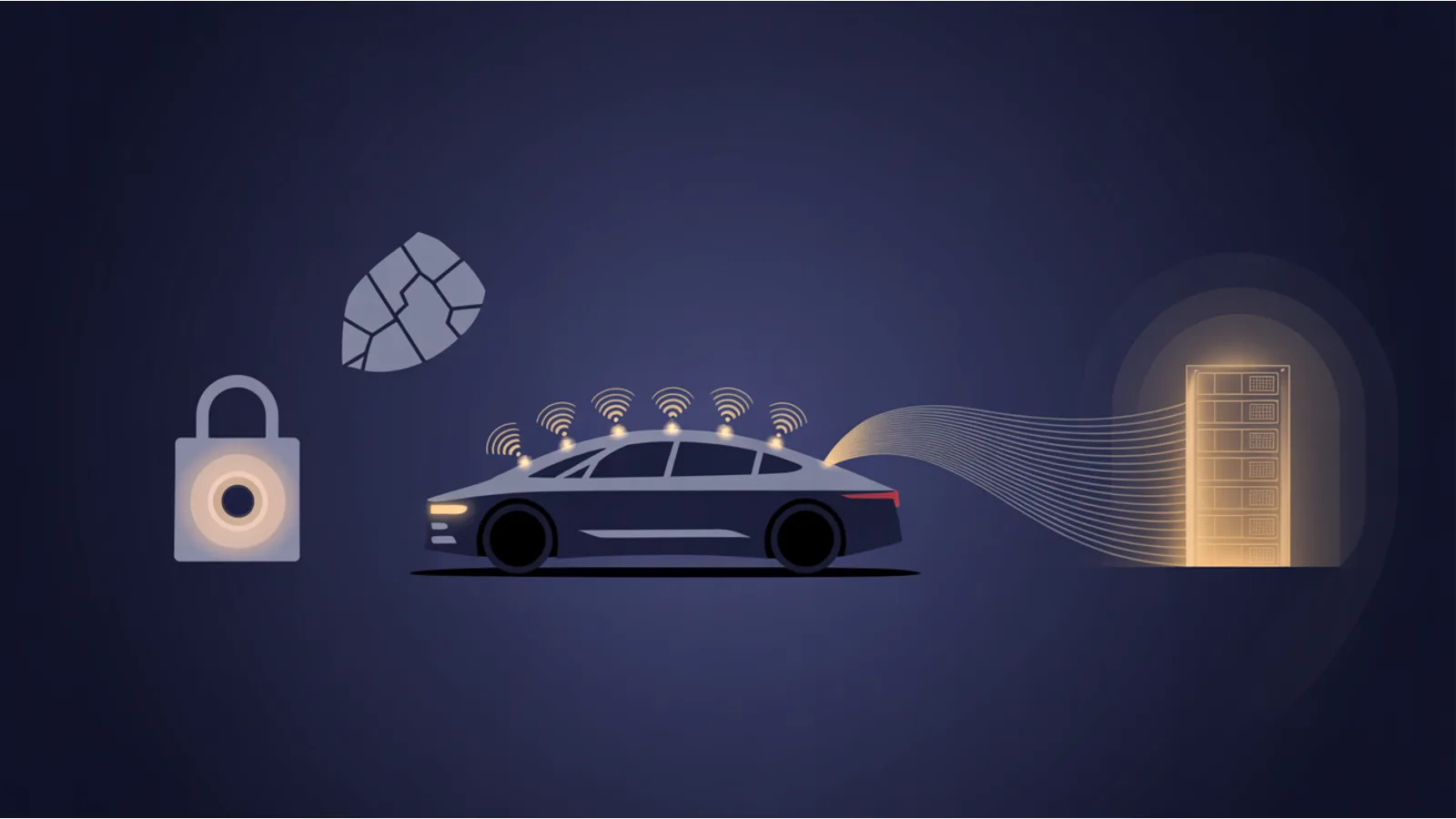
Every connected car collects data. The question is what gets collected, where it goes, and who controls it.
Researchers examining BYD's DiLink 3.0 operating system (specifically in the ATTO3) discovered a vulnerability in the system log dump feature, published as CVE-2025-7020. The finding: collected information was neither encrypted nor password-protected, setting a low bar for anyone looking to access the data and log files.
More concerning: all collected information is reportedly transmitted on an ongoing basis to Chinese servers via a pre-installed GSM modem. The car phones home constantly, and the data in transit has had documented encryption weaknesses.
BYD's public position varies by market:
- Australia: BYD states no driving or usage data is collected from Australian owners.
- Europe: BYD leadership claims no data transfers outside Europe, citing Google Cloud infrastructure without Chinese servers.
- United States: BYD faces a 27.5% tariff on Chinese EVs and broader technology security restrictions that have effectively blocked the brand from the US market.
The gap between "no data is collected" in some markets and "data is continuously transmitted via GSM modem" in technical audits is the kind of inconsistency that should make any buyer pause and verify the specific data practices for their market and model year.
How this compares to Tesla
Tesla collects plenty of data too. Camera feeds, driving behavior, location history, cabin camera footage. The difference is regulatory jurisdiction. Tesla's data processing falls under US and EU data protection law. BYD's data processing falls under Chinese data protection law, which includes provisions for government access that don't have direct equivalents in Western frameworks.
Neither company is a privacy champion. The Mozilla Foundation's "Privacy Not Included" research has flagged the entire automotive industry as a privacy disaster. But the specific concern with BYD is the combination of always-on data transmission, documented encryption weaknesses, and regulatory jurisdiction.
If you're in a market where BYD is available and the price-to-feature ratio is compelling, do two things before buying:
- Ask the dealer specifically what data the vehicle collects and where it's stored. Get the answer in writing for your market.
- Check whether your model and firmware version have addressed CVE-2025-7020 and any subsequent security patches.
The technology is real. The value is real. The privacy question is also real, and it deserves a real answer before you hand over a deposit.
Related reading
- How to validate an AI coding model before you trust it — the same "verify before you trust" principle applies to any tech purchase
- Security headers and the trust bundle — how trust signals work on the web, and why the same thinking applies to connected devices
- Email infrastructure for small business — another case where the infrastructure you depend on deserves scrutiny
Fact-check notes and sources
- BYD God's Eye sensor suite (12 cameras, 5 radars, 12 ultrasonic sensors): cleantechnica.com and electrikvehicles.com.
- Level 4 autonomous parking with liability guarantee: cleantechnica.com.
- Over 1 million BYD vehicles received God's Eye update (early 2026): driveauthority.com.
- CVE-2025-7020 (DiLink 3.0 encryption vulnerability): torqbull.com and National Vulnerability Database.
- GSM modem data transmission to Chinese servers: torqbull.com.
- BYD data claims (Australia and Europe): topgear.com and region.com.au.
- US 27.5% tariff on Chinese EVs: torqbull.com.
- Tesla FSD pricing ($99/month): tesla.com.
This post is informational, not legal or purchasing advice. Mentions of BYD, Tesla, Mozilla Foundation, and IIHS are nominative fair use. No affiliation is implied.
