
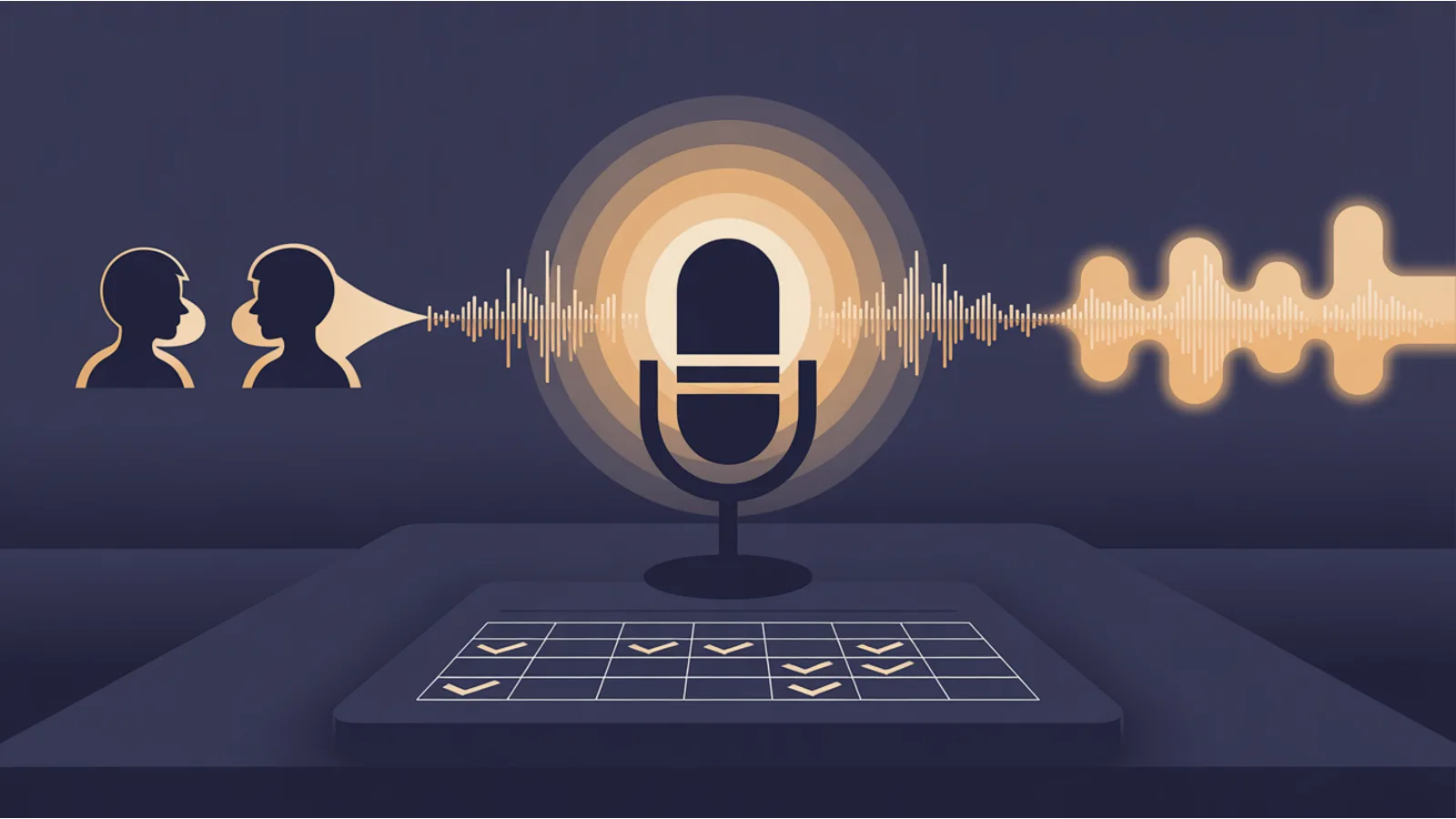
Most AI side-income stories involve generating images or writing marketing copy. This one is different. Babel Audio pays people to talk. Specifically, to have recorded conversations and read text aloud with near-perfect clarity, so that AI labs can train speech models on high-quality human audio.
The company behind it is David AI Labs Inc., a two-year-old firm focused solely on speech training data. They're one of the few companies in the AI data supply chain that doesn't try to do everything. No image labeling, no text annotation as a sideline. Just speech. That specialization is why the pay rates are higher than most data-labeling gigs and why the quality bar is correspondingly brutal.
What the work looks like
Babel Audio runs two types of projects.
Conversation recording. You're paired with another person for a 15-minute recorded conversation on a given topic. The conversations are unscripted but structured. You need to speak clearly, listen actively, and respond naturally. No crosstalk, no mumbling, no background noise. The recordings train conversational AI models, so they need to sound like real human dialogue while meeting studio-level audio standards.
Audio annotation. Converting recorded audio to text. This is transcription work, but for speech model training, which means precision matters more than speed. A missed word or an incorrect timestamp degrades the training data.
The pay
Babel Audio advertises rates up to $50 per hour. The actual rate depends on the project, the language, and your performance rating on the platform. English conversation partners typically earn $17 to $25 per hour based on publicly reported rates. Specialized language pairs or accented-English projects can pay higher.
Payment is weekly. The work is fully remote. You set your own hours. Those are real advantages over most gig-economy platforms.
The catch is utilization. Babel Audio's network includes over 40,000 contributors. Project availability depends on current demand from AI labs. You might have steady work for three weeks and then nothing for two. The income is supplemental, not primary. Plan accordingly.
The quality bar
This is where most people wash out. The recordings need to be clean. That means:
- A quiet room with no echo, no air conditioning hum, no keyboard clicks, no dog barking
- A decent microphone (USB condenser at minimum, not your laptop's built-in mic)
- Clear articulation without over-enunciation (they want natural speech, not voice acting)
- Perfect read-throughs on scripted content (one stumble can disqualify a recording session)
"It must be perfect" isn't marketing language. The speech data these recordings produce goes directly into model training pipelines. A mispronounced word or a background noise artifact doesn't just reduce quality; it actively degrades the model. Babel Audio's QA process rejects recordings that don't meet the standard, and rejected recordings don't get paid.
If you already have a podcast setup, a voiceover background, or a home recording environment, the barrier to entry is low. If you'd need to buy equipment and treat a room, factor that investment into whether the hourly rate makes sense for you.
Who's buying the data
David AI Labs describes itself as "trusted by top AI labs to develop the proprietary audio datasets that power their models." They don't name their customers publicly, but the speech AI training data market feeds into products from every major provider. Voice assistants, real-time translation, podcast transcription, call center AI, accessibility tools. The demand for high-quality multilingual speech data has grown alongside every model generation.
The market itself is worth paying attention to. As AI models get better at text, the remaining hard problem is natural-sounding speech in diverse accents, languages, and conversational contexts. The models that sound most human were trained on data from companies like this one. The humans who provided that data got paid for it.
How to get started
- Go to babel.audio and create an account
- Complete the onboarding recording sample (this is your audition)
- If accepted, browse available projects and select ones that match your language and availability
- Record on their platform, submit, get paid weekly
The whole process from signup to first recording can happen in a day if you have the equipment ready.
If you're thinking about income diversification more broadly, whether from AI voice work, building sites, or running a digital agency, The W-2 Trap covers why relying on a single income stream is the riskiest financial position most people occupy. Search "The W-2 Trap" on Amazon Kindle.
Related reading
- Escape the rat race: the complete guide — the broader framework for building income outside a paycheck
- Best books to start a business with no money — the reading list for the resource-constrained
- How to build wealth from nothing — first principles on compounding small income streams
Fact-check notes and sources
- David AI Labs Inc. operates Babel Audio: withdavid.ai and babel.audio.
- Pay rates up to $50/hr advertised; $17/hr commonly reported for English conversation partners: medium.com and ratracerebellion.com.
- 40,000+ contributors in global network: babel.audio.
- 15-minute conversation format, weekly pay, remote work: dashboard.babel.audio/jobs.
This post is informational, not employment or financial advice. Mentions of David AI Labs and Babel Audio are nominative fair use. No affiliation is implied.
