
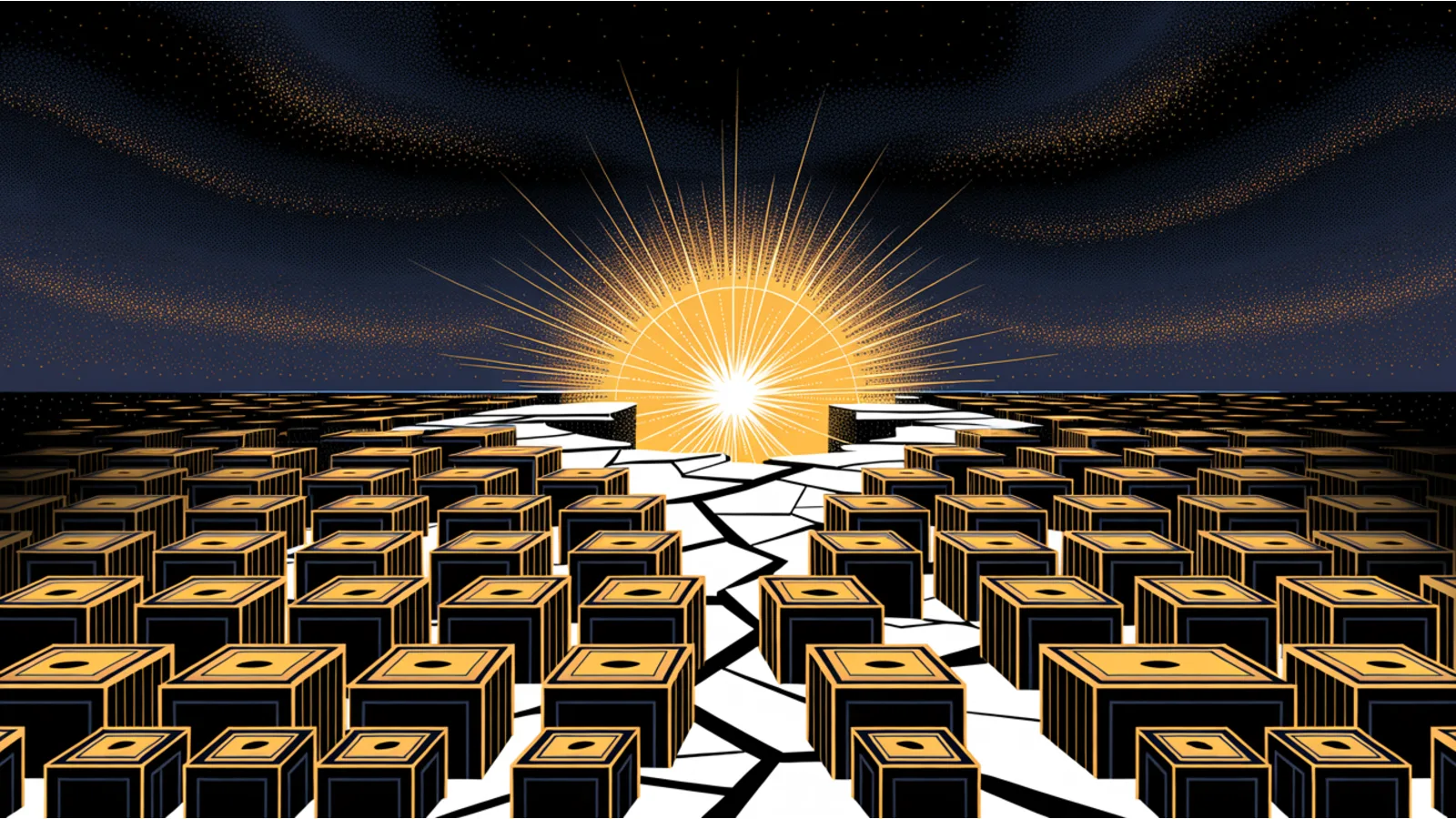
Most of the dynasties in this series show one half of the story: how a fortune is built and locked into a structure that keeps it whole across generations. The Pritzkers show both halves, because their fortune did the rare thing. They built one of the most elaborate wealth-preservation machines any American family ever assembled, a web of hundreds, by some accounts more than a thousand, domestic and offshore trusts, and then, uniquely among the great dynasties, that shared machine came apart. In a decade-long breakup touched off by a lawsuit from a teenage heir, the single Pritzker fortune fractured into roughly a dozen separate billionaire branches. It is the best case study in this whole series both of how the machine is built and of how it can shatter. This post reads both from the record.
From a law office to Hyatt and Marmon
The Pritzker story begins with an immigrant. Nicholas Pritzker arrived in Chicago from near Kyiv in 1881, at age ten, studied law, and founded the family law firm in 1902 (Boston Globe; Pritzker Organization). His grandson, Abram Nicholas "A.N." Pritzker, turned the family from lawyers into investors, shifting in the 1930s into real estate and small companies and, crucially, beginning to place family assets into trust starting in 1935 (Wikipedia, "Abram Nicholas Pritzker"). That seed, a habit of holding everything in trust, would define the family.
A.N.'s sons built the operating empire. In 1957 Jay Pritzker bought a small motel near the Los Angeles airport called Hyatt House for $2.2 million; the company lore says he wrote the offer on a napkin in an airport coffee shop, a story worth telling as legend, though the purchase itself is documented (Wikipedia, "Jay Pritzker"; Tharawat Magazine). That motel became the Hyatt hotel chain. Meanwhile Jay and his brother Robert, an industrial engineer, built the Marmon Group, an industrial conglomerate assembled from a 1953 acquisition that grew, over half a century, into roughly 125 businesses with about $7 billion in revenue (National Academy of Engineering; Berkshire Hathaway). Hyatt and Marmon were the engines that generated the cash. The trusts were what kept it.
The most elaborate trust machine
What set the Pritzkers apart was the structure they wrapped around the money. Jay Pritzker described the family's philosophy to a court in one sentence: "We have used trusts where others might have used partnerships or corporations" (Forbes). The scale of it is genuinely hard to fathom. Forbes' investigation found the family had created "hundreds" of trusts; a later business-school case study put the figure at more than a thousand, with a single family member serving as trustee of most of them (Forbes; Columbia Business School). Many of the key trusts were based offshore, in the Bahamas, and used non-family foreign nominees as their nominal creators, so that the family's fortune could, in Forbes' description, "defer and often eliminate U.S. income and transfer taxes to a degree" that later law would make impossible (Forbes).
The single most vivid illustration is A.N. Pritzker's estate. When he died in 1986 sitting atop a billion-dollar enterprise, his estate-tax return valued the estate at roughly $25,000. The IRS assessed a deficiency of about $53 million; the estate eventually settled in 1994 for $9.5 million, the audit having largely stalled because, as one account put it, "the paper chase halted in the Bahamas" (Forbes; Crain's Chicago Business). A billion-dollar fortune reported to the tax authorities as a $25,000 estate is the trust machine working exactly as designed. These were legal structures exploiting loopholes that have since been closed, and it made the Pritzker fortune, for a time, almost invisible to the tax system.
The breakup
Then, in a way no other dynasty in this series experienced, the machine came apart. The trigger was Jay Pritzker's death in 1999, which left eleven cousins jointly owning a fortune that had been run, in effect, as one giant partnership. In 2001 they signed a confidential "Family Agreement" to divide the entire enterprise among themselves over roughly a decade, with each cousin expected to end up with more than a billion dollars (Angus Advisory Group). It might have stayed orderly, except that in 2002 a nineteen-year-old named Liesel Pritzker, who had acted as a child under the name Liesel Matthews, sued her father and the eleven older cousins for about $6 billion, alleging that her and her brother's trusts had been raided (Wikipedia, "Liesel Pritzker Simmons"; Forbes). The suit was settled in 2005, on sealed terms widely reported at roughly $500 million each for Liesel and her brother (Forbes).
That lawsuit, as Forbes later put it, "began the dissemination of the family fortune." Over the following years the family sold and split the empire: it sold most of the Marmon Group to Warren Buffett's Berkshire Hathaway in a deal announced in 2007 and completed in stages, and it took Hyatt public in 2009 (Berkshire Hathaway; Hyatt). By 2011 the dissolution was complete, and a fortune once "monolithically managed like a limited partnership" had become a set of separate branches, each with its own billionaires (Holland & Knight). The same thing that happened to the Hunt oil fortune, a single fortune splintering into distinct family lines, happened to the Pritzkers, except here it was the deliberate unwinding of the trust structure itself.
There was also a costly failure along the way. The family co-owned Superior Bank, a Chicago thrift that Penny Pritzker chaired in the early 1990s and that pushed aggressively into subprime mortgages; it collapsed in 2001, an early warning of the crisis to come, and the Pritzker and co-owning families agreed to pay the government $460 million without admitting responsibility (GAO). It is a reminder that even the most sophisticated wealth structures do not make the underlying businesses immune to bad bets.
The branches today
The result of the breakup is that there is no longer one Pritzker fortune but many, and its members are unusually prominent. Penny Pritzker served as U.S. Secretary of Commerce and is now a senior fellow of the Harvard Corporation (Wikipedia, "Penny Pritzker"). Her brother J.B. Pritzker has been the governor of Illinois since 2019 (Illinois Governor's office). Thomas Pritzker long ran Hyatt as its executive chairman, until he retired from its board in early 2026 amid scrutiny over his association with Jeffrey Epstein (Forbes). Anthony Pritzker runs a private-capital firm, and Jennifer Pritzker, a retired Army colonel, is widely reported to be the first openly transgender billionaire (Wikipedia, "Pritzker family"). Collectively, Forbes still ranks the Pritzkers sixth among America's richest families, at about $53 billion, but spread now across separate branches rather than held as one (Forbes).
That is what makes the Pritzkers the most instructive family in this series. Every other dynasty here answers the question "how do you keep a fortune together across generations?" The Pritzkers answer a harder one: what happens when the family that built the perfect machine no longer wants to share it? The trusts that A.N. and Jay Pritzker built were arguably the most effective wealth-preservation structure any American family ever assembled, and they worked so well that the fortune became nearly invisible to the tax authorities. But structure preserves wealth; it does not preserve unity. When the eleven cousins decided they would rather be eleven fortunes than one, the machine that had held everything together was disassembled, deliberately, over a decade, and one of the great American dynasties chose to become a dozen smaller ones. The trusts could defeat the tax collector. They could not, in the end, hold the family together, because no structure can do that once the people inside it decide to part.
Related reading
- One Wildcatter, Three Families: another great fortune that splintered into separate family branches.
- The Kennedy Money Machine: the GRATs and trusts, including the Pritzker-adjacent techniques, that move wealth across generations.
- The Archetype: a fortune whose trusts held the family together rather than coming apart.
- The Working Ledgers: the market and the money underneath every fortune, whole or divided.
Fact-check notes and sources
- The rise (Nicholas Pritzker arriving from near Kyiv in 1881 and founding the family law firm in 1902; A.N. Pritzker shifting into investing in the 1930s and beginning to place assets in trust from 1935; Jay Pritzker's 1957 purchase of the Hyatt House motel for $2.2 million, with the napkin story as legend; and Robert and Jay building the Marmon Group from a 1953 acquisition into roughly 125 businesses and about $7 billion in revenue): Boston Globe, Pritzker Organization, Wikipedia, "Abram Nicholas Pritzker", Wikipedia, "Jay Pritzker", Tharawat Magazine, National Academy of Engineering, and Berkshire Hathaway 2012 letter.
- The trusts (Jay Pritzker's "we have used trusts" quotation; the hundreds to more than a thousand trusts, many offshore in the Bahamas using foreign nominees; the tax-deferral and elimination described by Forbes; and A.N. Pritzker's estate reported at roughly $25,000 against a billion-dollar enterprise, the $53 million IRS assessment, and the 1994 settlement of $9.5 million): Forbes 2003 investigation, Columbia Business School case study, Forbes 2013, and Crain's Chicago Business. The "more than a thousand" figure is a reported round number; Forbes' own investigation said "hundreds."
- The breakup (Jay Pritzker's 1999 death; the 2001 confidential Family Agreement among eleven cousins to divide the enterprise over roughly a decade, with each ending up with more than a billion dollars; Liesel Pritzker's 2002 lawsuit and its 2005 sealed settlement reported at about $500 million each; the sale of most of Marmon to Berkshire Hathaway and the 2009 Hyatt IPO; and the completion of the dissolution by 2011): Angus Advisory Group, Wikipedia, "Liesel Pritzker Simmons", Forbes 2003, Forbes 2013 on the settlement, Hyatt IPO, and Holland & Knight. The settlement figures are estimates of a sealed agreement.
- Superior Bank and today (the family's co-ownership of Superior Bank, Penny Pritzker's early-1990s chairmanship, its subprime collapse in 2001, and the $460 million government settlement without admission of responsibility; and the prominent branches today, including Penny Pritzker, J.B. Pritzker as Illinois governor, Thomas Pritzker's 2026 retirement from the Hyatt board, and the roughly $53 billion sixth-place family ranking): GAO report on Superior Bank, Wikipedia, "Penny Pritzker", Illinois Governor's office, Forbes on Thomas Pritzker's retirement, Wikipedia, "Pritzker family", and Forbes on the family. The $460 million was the announced 2001 settlement; net-worth figures are Forbes estimates that vary by year.
This post is informational, not tax or financial advice. All figures are reproduced from the cited public sources, court records, and government reports, with sealed and estimated figures flagged as such. The trusts described are legal structures, and nothing cited is a finding of wrongdoing. Individuals are discussed as nominative fair use from the public record, with no affiliation implied.
