
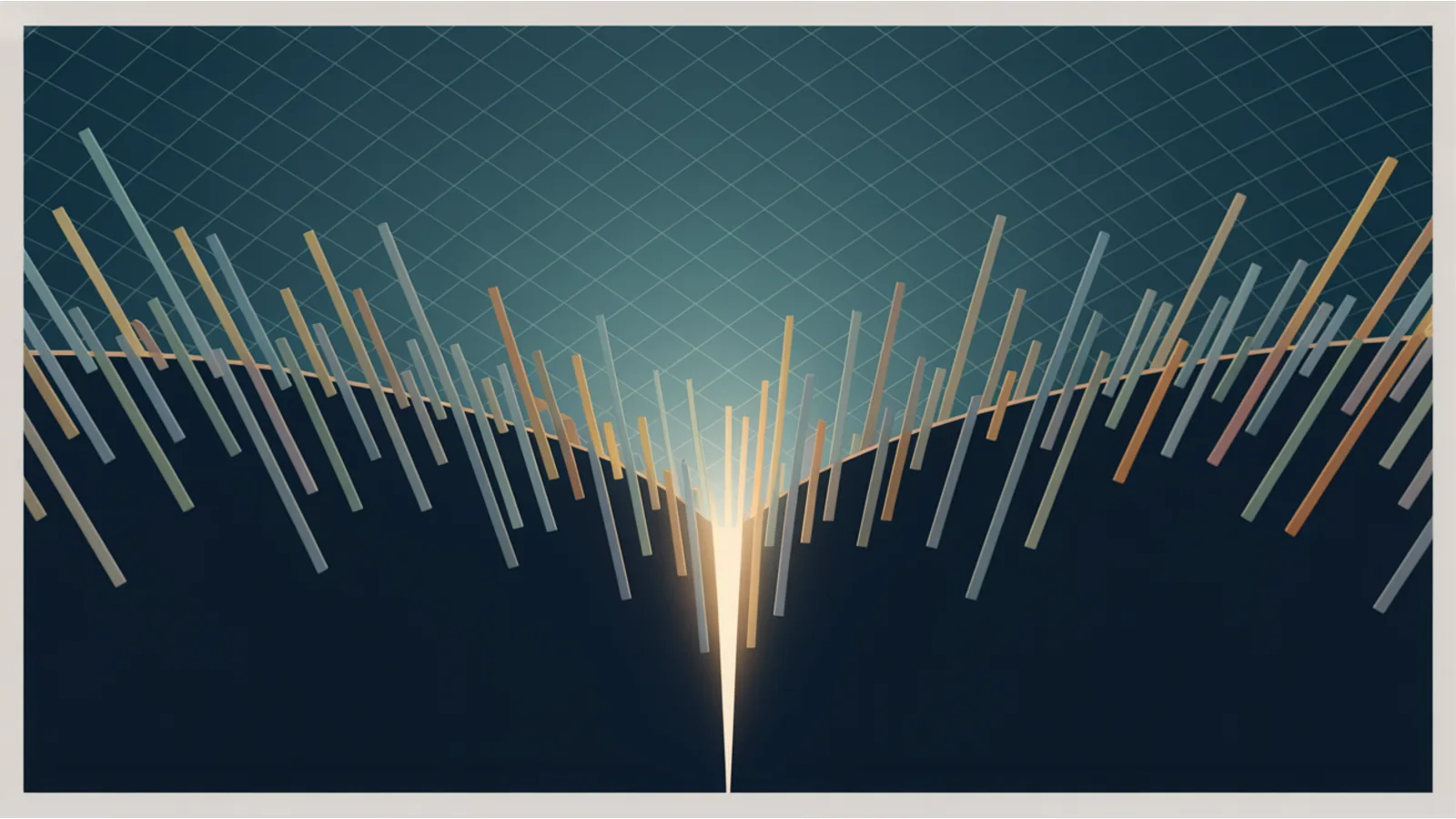
Three "worst since" headlines in eight months. The same crowded trades, the same short books, and the same kind of market-neutral funds. When a wreck keeps happening on roughly the same schedule, it stops looking like bad luck. It starts looking like a feature of how the market is built.
Here is the uncomfortable version. The strategy that got sold as the calm, all-weather corner of the hedge fund world has quietly turned into one of its most reflexive corners. Not because the math is wrong, but because too many people are running the same math at the same time.
What the strategy promises, and what it actually does
Quant funds run what they call market-neutral strategies. The pitch is clean. Buy the high-quality stocks, short the junk, and you should make money whether the broad market rises or falls. The longs and shorts cancel out the market itself, and what's left over is supposed to be skill.
That's the theory. On paper the book is balanced and the risk looks walled off from whatever the index is doing on any given day.
The reality is messier. Hundreds of funds hold nearly identical short positions, because they're all feeding off the same academic factors, the same alternative data, and increasingly the same machine-learning models. Each fund can see its own book in perfect detail. What no single fund can see is how much of its short book is sitting inside everyone else's book too.
So the thing that's supposed to make these funds safe, the balance between longs and shorts, hides the thing that makes them fragile. The shorts are crowded, and crowding is invisible from the inside.
How the trap springs
The blowups all follow the same three beats.
First, the crowding. Because everyone uses similar research and similar signals, they flag the same "bad" companies to short. Capital piles into the same names. The trade works for a while, which only pulls in more capital.
Second, the spark. Something lights up the junk. A speculative rally, a short squeeze, a sudden shift in risk appetite. The low-quality, heavily shorted names that everyone is betting against jump in price.
Third, the stampede. Every fund starts bleeding on the same shorts at the same moment. To stop the bleeding they all try to buy the stock back and cover. The exit is far too narrow for that much traffic, so the covering itself drives prices higher, which forces more covering. That feedback loop is the quake. It's a deleveraging event that feeds on itself.
Why it keeps getting worse
A few things have made each round bigger than the last.
Borrowed money is near records. Funds are running more gross leverage than they have in years to squeeze return out of thin factor edges. The catch is mechanical: more borrowed money turns a modest pop in a shorted name into a serious hit to the fund.
Success pulled in more cash. Strong multi-year track records attracted a wave of fresh money, and more money chasing the same signals makes the crowding tighter, not looser.
And the "neutral" label is doing a lot of quiet work. These funds really do show low correlation to the broad market. The problem is their correlation to each other, which by some prime broker estimates has climbed toward the 0.9 range under stress. Low correlation to the index, dangerously high correlation to the fund down the street.
The timeline of shocks
String the genuine drawdowns together and the cadence is hard to miss. Every few months, the same wound reopens.
- Summer 2025: the first real unwind, the one researchers later picked apart as the season's quant wobble.
- October 2025: a second shock, the one that became the new "worst since" benchmark everyone keeps citing.
- January 2026: crowded US shorts buckled again. UBS pegged US-focused quant funds down about 2.8 percent in the first two weeks of the year, the worst stretch since October, with Goldman tracing the pain to crowded trades and high-beta shorts.
- March 2026: a brutal stretch for the broader hedge fund industry, with a geopolitical scare and a sharp jump in cross-asset volatility. Systematic long/short funds actually finished the month slightly positive, so this one was a volatility scare more than a quant unwind. It belongs on the watch list, not the casualty list.
- Late June 2026: quant funds posted their worst five-day rout since 2023 as momentum names rolled over into quarter-end. The reported drawdown landed in the neighborhood of three percent inside a single week.
Then the part that is a forecast, not a fact:
- Late September or October 2026: a likely vulnerability window as leverage rebuilds after the summer.
- December 2026 into January 2027: year-end tax-loss selling and the usual January bounce in beaten down names could light the next junk rally and run it straight into crowded shorts.
Treat the past entries as history and the future ones as weather forecasting. The point isn't the exact dates. The point is that the gaps between events keep being short, and they keep being similar.
What to actually watch
If the mechanism is fuel, density, and a spark, then you watch all three.
- The fuel (gross leverage): prime brokerage reports are the tell. When gross leverage climbs back toward peak, the system is primed.
- The density (factor crowding): track how tightly market-neutral funds correlate with each other, not with the index.
- The spark (the catalyst): set alerts for strange, sharp moves in heavily shorted, low-quality names. That's usually where the fire starts.
None of these tells you the day it happens. Together they tell you whether the room is full of gas.
Try it yourself
The estimator below is live on this page. It does not predict anything. It just shows how fuel, density, and a spark compound on each other, which is the whole point of the structural story.
If you want the estimator on your own site, copy the markup above and the script at /js/quant-drawdown-widget.js into any CMS that allows a custom HTML block.
The honest caveat
This is a pattern, not a promise. Crowded trades can stay crowded far longer than anyone expects, and a clean structural story can still be wrong about timing. The forward dates above are scenarios, not predictions you should size a position around.
Watching the professionals blow themselves up on borrowed money is also a decent argument for owning your own financial base instead of renting your income from a single paycheck. That's the through-line of my book The W-2 Trap (search the title on Amazon Kindle): why even high earners stay fragile, and the steps that actually move you off that treadmill.
Related reading
- What Actually Fixed My Claude Code Sessions: the trading-desk lessons that carried straight over into working with AI.
- Why W-2 Workers Stay Broke (Even Making Six Figures): the personal-finance version of the same fragility problem.
- I Escaped the Rat Race: the Exact 6-Book Framework: the full reading path off the treadmill.
- Stop Reading Finance Books in Random Order: the sequence that actually builds the foundation.
Fact-check notes and sources
Hat tip to Ken E for sharing this one. He didn't write the piece, but he surfaced the story; the specific numbers below come from the outlets cited.
- January 2026 drawdown, UBS estimate of roughly 2.8 percent and Goldman's attribution to crowded trades and high-beta shorts: Bloomberg, Hedgeweek, Investing.com.
- Summer 2025 quant wobble, the academic post mortem on crowding and deleveraging: MSCI.
- Late June 2026, worst five-day rout since 2023 as momentum names rolled over: Bloomberg via MSN, Edgen.
- The crowding and deleveraging mechanism, written up as a practical guide for allocators and managers: Resonanz Capital.
- Broader 2026 setback framing: Rebellion Research.
- The pairwise correlation figure near 0.9 is described as a prime broker style estimate under stress and is included as illustrative, not as a single audited number.
This post is informational, not financial advice. Any mention of specific firms is nominative fair use, and no affiliation is implied.
