
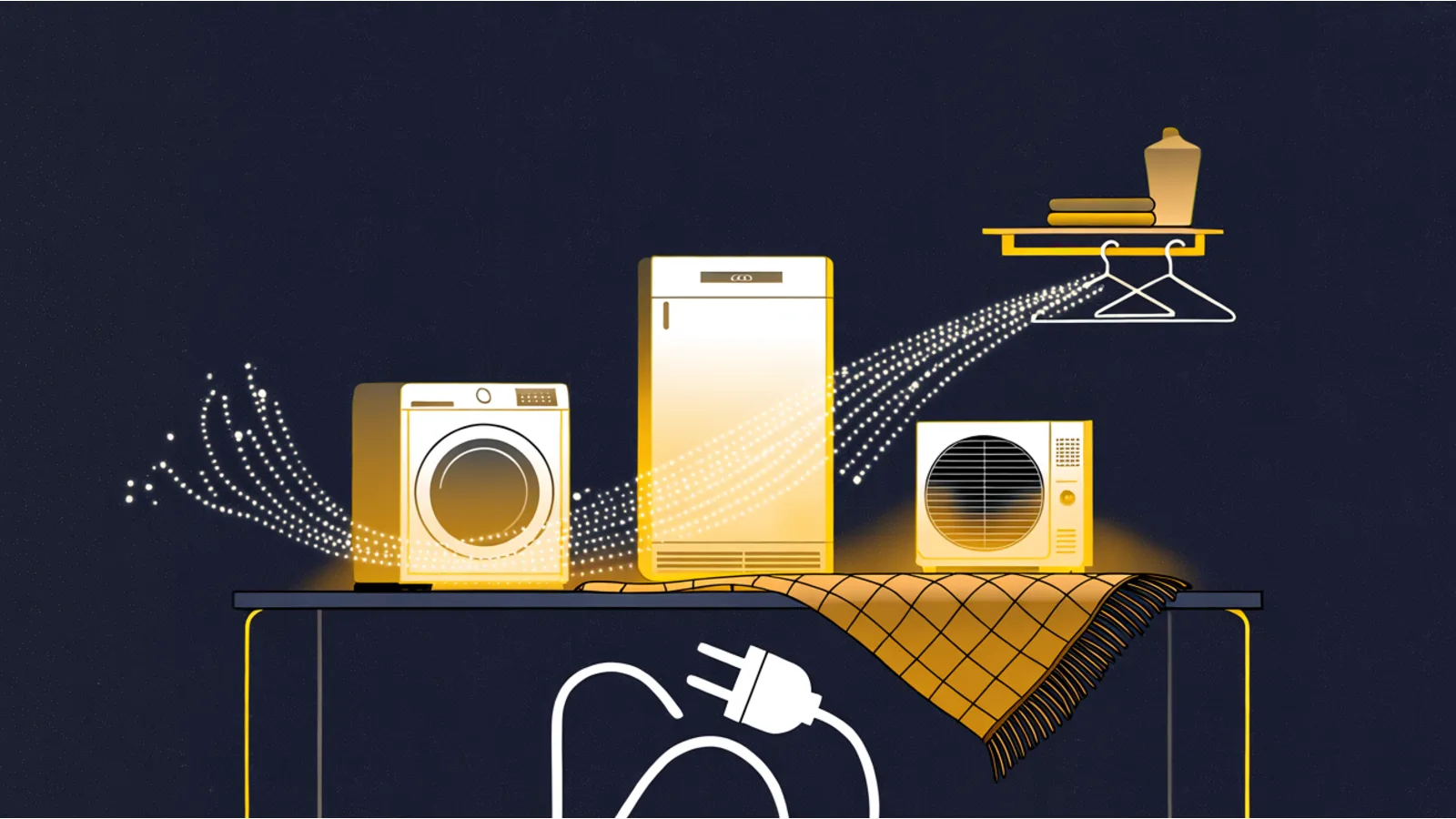
Japan has a whole shelf of everyday home appliances that barely made it across the Pacific. Most of the roundups you find about them are written from a "look how clever this is" angle and stop there. If you work from home or run a small operation, the more useful question is the one those pieces dodge: can you actually use this in the States, and is it worth the hassle?
Here is the honest version, with the part that matters most up front.
The voltage gotcha, first
Japan runs its standard outlets at 100 volts, the lowest of any major country and well under the 220 to 240 volts common across Europe and much of Asia. The US sits in between at 120. If you assumed Japan was 220, you are in good company, but it is the exception. Japan does wire separate 200-volt circuits for big appliances like air conditioners, with a different outlet shape, which is part of why the self-cleaning unit later in this list is not a plug-in import. That gap sounds small, and for some gadgets it is, but anything that makes heat is the tricky case. A kotatsu or a futon dryer plugged into a step-down setup often seems to work, then runs cooler or slower than it should, and can trip its own thermal cutoff. Even the writers who love these things admit the heated table needs a hefty voltage converter to run abroad. So treat "it works on a converter" as a caution, not a promise, especially for the heat-making items below.
With that out of the way, here are four worth knowing.
1. The Panasonic deodorizing hanger (the best import candidate)
This is the one I would actually ship. It is a clothes hanger that freshens a garment overnight using Panasonic's nanoe technology, blowing fine ion particles through eight vents to break down odors like sweat, smoke, and cooking smells. You hang the jacket, pick a mode, and walk away (Panasonic Newsroom, Panasonic Japan MS-DH210).
Why it travels well: it is low wattage, it has a normal five-hour and a long seven-hour cycle, and Panasonic puts the electricity cost at under one yen per use. For anyone in client-facing work who cannot dry-clean a blazer every week, that is a genuinely useful machine. It runs roughly ¥15,000 to ¥17,000 in Japan, on the order of $100 to $120 at a rough mid-2026 exchange rate. The catch is that it is a grey-market buy in the US, usually through third-party sellers with no US warranty.
2. The futon dryer (reframe it as a damp and shoe dryer)
Marketed in Japan for drying bedding in the humid rainy season, the Iris Ohyama futon dryer is really a small warm-air blower with attachments. The genuinely practical angle for a US home or workshop is everything else it dries: work boots, gym bags, a damp basement corner. It also does something useful for allergy-prone households, since heating bedding above about 50 degrees Celsius for half an hour kills dust mites (Japan Trend Shop, Iris Ohyama on Amazon Japan).
It runs around ¥10,000 to ¥12,000, call it $70 to $80 roughly, and draws enough power that the voltage caveat applies. US-market alternatives exist, so this is a "nice if you find one" rather than a must-import.
3. The kotatsu (lovely, but a heavy import)
The kotatsu is a low table with a flat heater fixed underneath and a quilt draped over it. You sit with your legs under the warmth. It is genuinely old, evolving from a hearth-based design centuries ago, and it is wonderful in person (Wikipedia overview, Yamazen model).
Honest take for a US buyer: it is a piece of furniture that also makes heat, which is the worst combination for importing. The popular Yamazen tables run roughly ¥14,000 to ¥17,000 in Japan, but once you add shipping and a large converter, the landed cost climbs and the heat output may disappoint on US voltage. For most people a heated throw over a low table gets you most of the feeling for a fraction of the trouble. One charming footnote that is real: Marukan makes a tiny kotatsu for cats with a metal-sheathed cord so the cat cannot chew through it, drawing 25 watts and costing about 5 yen to run for eight hours (Marukan, SoraNews24).
4. The self-cleaning air conditioner (do not import, but ask for the feature)
With Japanese summers pushing 40 degrees Celsius and air conditioning in the vast majority of homes, the big makers built units that clean themselves. Hitachi's Freeze Cleaning is the clearest example: it frosts the heat exchanger, then rapidly thaws it to flush away the mold and dust that survive ordinary filter cleaning, and the company says it removes up to 93 percent of that buildup (Hitachi FrostWash).
This is not an import. These are hard-wired, higher-voltage units that need professional installation, and the premium models run well over ¥130,000. The takeaway is different here: self-cleaning and self-drying coil features now show up on US-market mini-splits too, so the move is to ask for that feature next time you buy, not to ship one from Tokyo.
The pattern worth stealing
The thread running through the good ones is thoughtful low-wattage design. A cat warmer that costs four cents a night. A garment freshener that costs under a yen a cycle. That is the same instinct that makes a small operation cheap to run: pick the tool that does one job well without quietly running up the bill. You do not have to import anything to apply it.
Fact-check notes and sources
- Panasonic deodorizing hanger: nanoe technology, eight vents, five and seven-hour modes, under one yen per use, with pollen-inhibition claims, per Panasonic Newsroom and the MS-DH210 product page. Open-price item; street prices have run roughly ¥15,000 to ¥17,000 (kakaku.com).
- Iris Ohyama futon dryer: mat-less warm-air dryer with shoe attachments; dust mites die around 50 degrees Celsius over about 30 minutes; roughly ¥10,000 to ¥12,000 (Japan Trend Shop, Amazon Japan).
- Kotatsu: history and design per Wikipedia; Yamazen 105 by 75 cm tables run roughly ¥14,000 to ¥17,000 (Yamazen). The Marukan cat kotatsu draws 25 watts at about 5 yen per eight hours with a metal-sheathed cord (Marukan).
- Hitachi Freeze Cleaning: frosts then thaws the heat exchanger to remove up to 93 percent of buildup (Hitachi); premium X-series units run well above ¥130,000 (kakaku.com).
- Voltage: Japan's standard residential outlets are 100 volts, the lowest among major countries, while the US uses 120 and most of Europe and Asia use 220 to 240. Japan does provide separate 200-volt circuits for large appliances such as air conditioners (KEPCO, RISE Corp. Tokyo guide). Dollar figures here are rough conversions at approximately 150 yen to the dollar and will move with the exchange rate. I could not find independent US-voltage test results for these specific units, so every "works on a converter" note is a caution, not a guarantee.
This post is informational, not buying or electrical-safety advice. Confirm voltage compatibility and warranty before importing any appliance. Mentions of Panasonic, Iris Ohyama, Yamazen, Marukan, Hitachi, and other third parties are nominative fair use. No affiliation is implied.
