
You have eaten their products your whole life and you would not recognize their faces, which is exactly how they want it. The Mars family owns Mars, Incorporated, the maker of M&M's, Snickers, Milky Way, Pedigree, and Royal Canin, one of the largest private companies in America. The family is the third richest in the country, worth an estimated $129 billion, behind only the Waltons and the Kochs. And they have spent more than a century doing the thing that this series keeps finding underneath the biggest fortunes: staying private, staying quiet, and keeping the whole empire out of public view. Like the Cargills, the Marses prove that in America the largest money is very often the most invisible. This post reads the fortune from the record.
From a Tacoma kitchen
Mars began in a kitchen. Frank C. Mars started making and selling butter cream candy from his home in Tacoma, Washington, in 1911, and moved the business to Minnesota in 1920 (Mars history). The products that built the fortune came in a rush over the next two decades: Milky Way in 1923, Snickers in 1930, 3 Musketeers in 1932, and M&M's in 1941, first made for the U.S. military so soldiers could carry chocolate that would not melt in their hands (Mars history). The two letters stand for Mars and Murrie, from a 1941 partnership Frank's son Forrest struck with an associate (Wikipedia, "Forrest Mars Sr."). Forrest Mars Sr. was the one who made it a global empire, driving the company hard for decades and expanding it worldwide before handing off in 1973 (Mars history).
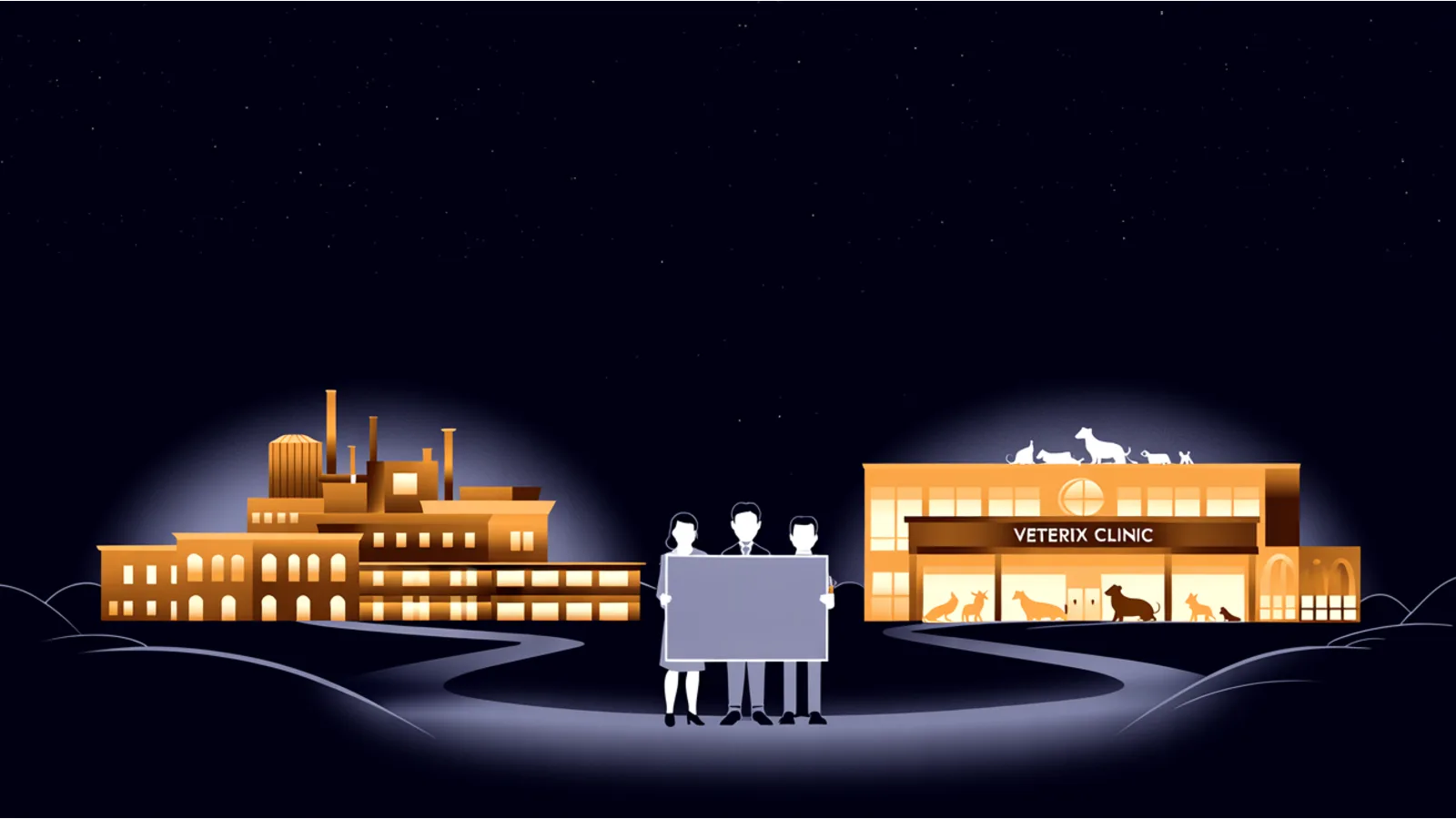
Over the following half-century Mars pushed far beyond candy. Today it is organized into confectionery, pet food, human food, and science and diagnostics, and it owns a set of brands most people never connect to one another: the candy names, plus the pet-food giants Pedigree, Whiskas, and Royal Canin (Wikipedia, "Mars Inc."). Its biggest expansion has been into pets. Mars bought Royal Canin in the early 2000s, then moved into veterinary care on an enormous scale, acquiring the Banfield and BluePearl hospital chains and, in 2017, VCA Animal Hospitals for about $9.1 billion; Mars Veterinary Health now runs roughly 3,000 clinics (BLG; Fortune). The maker of Snickers is now also one of the largest operators of veterinary hospitals in the world.
The most famous deal in Mars history, though, is the one that connects to another family in this series. In 2008, Mars bought the Wm. Wrigley Jr. Company, the chewing-gum giant, for about $23 billion in cash, and it financed the purchase with the help of Warren Buffett's Berkshire Hathaway, which put up billions and took a minority stake in the Wrigley subsidiary (CNN Money). It is a rare instance of the famously debt-averse Marses taking on outside money, and it is the same Berkshire float at work, financing a candy merger. Mars later bought Buffett out. Today Mars reports revenue of roughly $65 billion after a major 2025 acquisition, and ranks fourth on Forbes' list of America's largest private companies (Forbes).
The invisible family
The family that owns all of this is deliberately, famously unseen. Forbes ranks the Mars family third among America's richest families, at $129 billion, and notes that no other American family besides the top three even has a twelve-figure fortune (Forbes). The wealth is held chiefly by the third generation and their heirs: John Mars and Jacqueline Mars, each worth about $43 billion and each owning roughly a third of the company, and the four daughters of their late brother Forrest Mars Jr., who died in 2016 (Forbes on John Mars; Forbes on Jacqueline Mars). In 2024 the family took about $1.5 billion in dividends out of the company (Bloomberg).
And they hide. This is not a figure of speech. Fortune reported that photographs of the family are "virtually nonexistent" and that "Mars executives are forbidden to have their pictures taken for publications" (Fortune). A Washingtonian profile of them was titled, aptly, "Sweet Secrets: Opening Doors on the Very Private Lives of the Billionaire Mars Family" (Washingtonian). They are, in the words of one outlet, "notoriously private billionaire heirs" (South China Morning Post). A family worth $129 billion has managed to remain, to most Americans who eat their candy daily, entirely faceless.
The principle of privacy
The Marses have a philosophy that explains the secrecy, and it is written down. The company runs on what it calls its Five Principles, the last of which is Freedom, and the family reads that principle to mean private ownership. In the company's current words, "Freedom lets us shape our future. Performance allows us to remain free," and being private lets Mars "think across generations, not quarters" (Mars Five Principles). Victoria Mars, a fourth-generation family member who chaired the company, put it directly: "we need to be a profitable business in order to retain our freedom, and this is what allows us to think long term" (Brown Brothers Harriman). Forrest Mars Sr. built the company on the conviction that the only way to have absolute independence was to stay 100 percent family-owned and, mostly, debt-free (CMG Partners). Privacy, for the Marses, is not shyness; it is the whole business model. A public company answers to shareholders every quarter. A private one answers to no one, and can plan in decades.
The structure enforces it. Mars has never gone public and states plainly that it intends to stay family-owned; family members own the company and sit on its board, but professional, non-family executives run the operations day to day (Fortune). The family's succession philosophy is telling: members are expected to gain experience elsewhere first, because, as Victoria Mars said, "the worst possible outcome is for a family member to work in the family business and fail" (Brown Brothers Harriman).
The honest note
There is one part of the Mars story that belongs in any full account, and it connects them to the Mellons. ProPublica's 2021 investigation "The Great Inheritors," built from leaked IRS data, named the Mars family, alongside the Scripps and Mellon families, as a dynasty that used trusts to shield wealth across generations. Based on the tax records it analyzed, ProPublica reported that Jacqueline Mars "had more than 15 GRATs," a type of trust used to pass appreciation to heirs tax-free, and had "received more than $1 billion in trust income since 1999" (ProPublica). Fairness requires the family's response, which ProPublica also published: a spokesperson said the family "prides itself on being responsible Americans" who "have always paid their taxes in full," and noted that Mars had paid over $15 billion in corporate taxes over a decade (ProPublica). These trusts are legal, and nothing here is a finding of wrongdoing; that is precisely the point, both of ProPublica's reporting and of this series. The tools that preserve a fortune across generations are written into the tax code, and the very rich use them.
Put it all together and the Mars family is one of the purest examples of the pattern this series keeps documenting. A fortune that began in a kitchen in 1911 became, over four generations, a $129 billion empire spanning candy, pet food, and veterinary hospitals, held whole and entirely in private, run on a written principle that treats privacy as the source of freedom, its owners so committed to invisibility that they forbid their own photographs, and its wealth preserved across generations with the same trust machinery the other great dynasties use. Most families that get this rich eventually go public, or fracture, or at least become famous. The Marses did none of it. They kept the company, kept the family together, and kept the curtain drawn, for more than a hundred years, and the result is one of the largest and least visible fortunes in America.
Related reading
- The Biggest Company You Have Never Heard Of: Cargill, the other giant private family fortune built on food.
- The Dynasty That Became a Museum and a Bank: the Mellons, named alongside Mars in ProPublica's "Great Inheritors."
- The Hidden Owners: the quiet fortunes and why private companies stay invisible.
- The Working Ledgers: the market and the money underneath every private empire.
Fact-check notes and sources
- The company (Frank C. Mars founding the business in Tacoma in 1911 and moving to Minnesota in 1920; Milky Way in 1923, Snickers in 1930, 3 Musketeers in 1932, and M&M's in 1941 for the military, with the name from the Mars and Murrie partnership; Forrest Mars Sr. building the global empire; the confectionery, pet-food, human-food, and science divisions and the M&M's, Snickers, Pedigree, Whiskas, and Royal Canin brands; the veterinary expansion including the roughly $9.1 billion VCA acquisition in 2017 and about 3,000 clinics; the 2008 Wrigley purchase for about $23 billion financed with Berkshire Hathaway; and roughly $65 billion in revenue ranking fourth among America's largest private companies): Mars history, Wikipedia, "Forrest Mars Sr.", Wikipedia, "Mars Inc.", BLG on the VCA deal, Fortune on pet care, CNN Money on Wrigley, and Forbes company profile. The revenue figure is self-reported or estimated because Mars is private; Berkshire's exact financing split is secondary analysis.
- The family (the Mars family ranked third among America's richest families at $129 billion behind the Waltons and Kochs; John and Jacqueline Mars each worth about $43 billion and each owning roughly a third, and Forrest Mars Jr.'s death in 2016 with his stake passing to his four daughters; the roughly $1.5 billion in 2024 dividends; and the family's documented secrecy, including forbidding photographs): Forbes on the richest families, Forbes on John Mars, Forbes on Jacqueline Mars, Bloomberg, Fortune archives, Washingtonian, and South China Morning Post. The $129 billion is the 2026 Forbes figure; a $117 billion, second-place figure was the 2024 ranking, and individual net worths move daily. The company is described as privately held by the family rather than with a printed "100 percent."
- The structure and the ProPublica note (the Five Principles including Freedom and the "think across generations, not quarters" framing, Victoria Mars's quotation, and Forrest Mars Sr.'s insistence on staying family-owned and debt-free; the never-public structure with non-family management; and ProPublica's 2021 "The Great Inheritors" naming Mars alongside Scripps and Mellon, the report that Jacqueline Mars had more than 15 GRATs and received more than $1 billion in trust income since 1999, and the family's on-record response about paying taxes in full): Mars Five Principles, Brown Brothers Harriman, CMG Partners, Fortune, and ProPublica. The GRATs and trusts described are legal structures, and nothing cited is a finding of wrongdoing.
This post is informational, not tax or financial advice. All figures are reproduced from the cited public sources, with private-company and estimated figures flagged as such and the family's own response included. Individuals and the company are discussed as nominative fair use from the public record, with no affiliation implied.
