
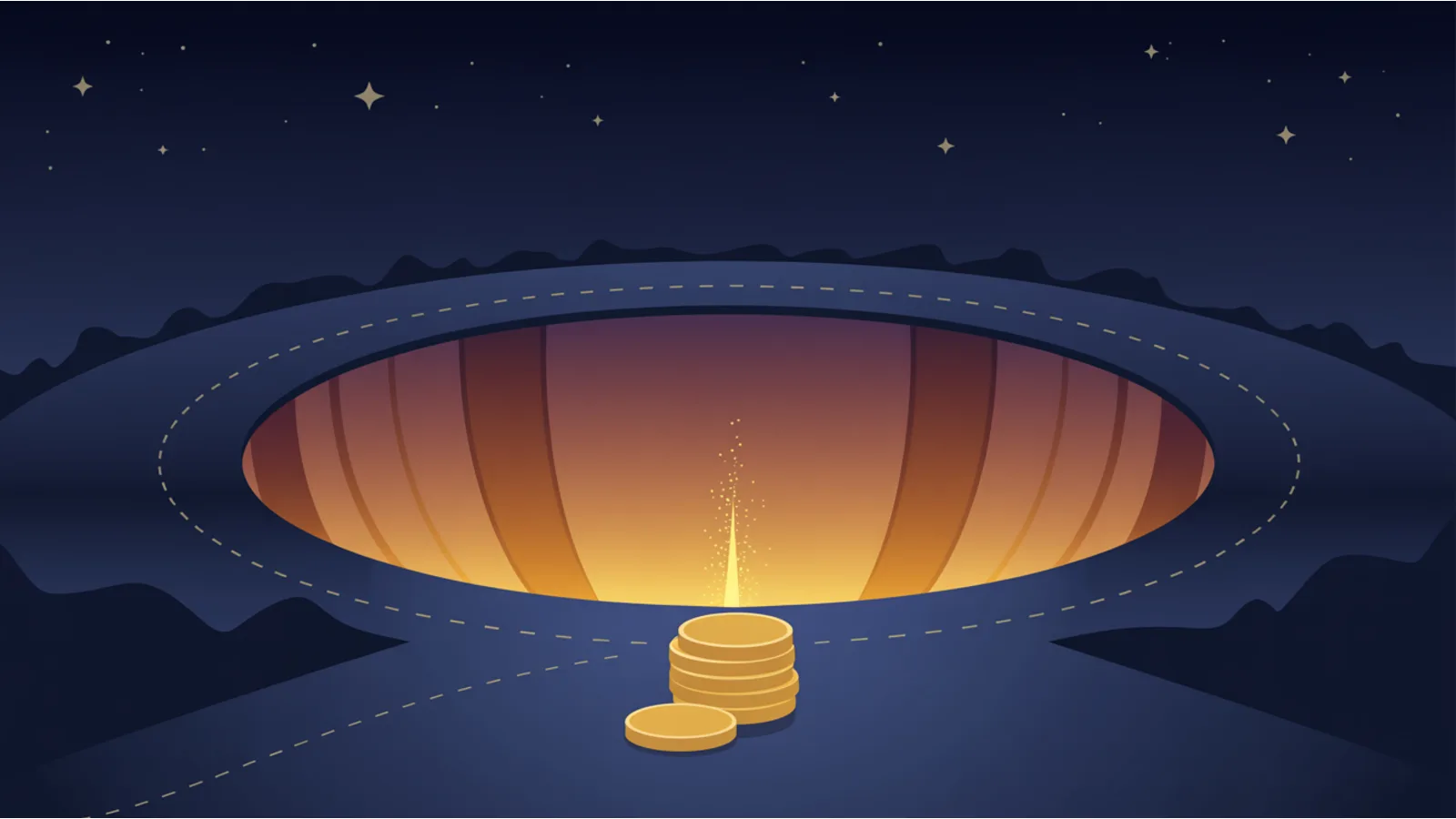
Near Waxahachie, Texas, about 30 miles south of Dallas, roughly 14 miles of tunnel run in a broken arc beneath the Ellis County prairie. They were bored to hold the world's most powerful particle accelerator. Instead they hold nothing. The shafts were filled, the tunnels sealed, and the site sold. Before that happened the United States had spent about $2 billion of public money on a machine that never ran a single experiment.
This is the Superconducting Super Collider, or SSC. It is one of the canonical cases in any honest accounting of where public money goes, because it is not a story about fake science or a program nobody wanted. The physics was real, the goal was widely shared, and the answer the machine was built to find was eventually found somewhere else. What killed it was cost, timing, and politics. This post walks the record from primary sources, keeps the money buckets separate, and sets the honest critique next to the honest defense.
What the SSC was
The SSC was a planned circular proton-proton collider with a ring circumference of 87.1 kilometers, about 54.1 miles. That is why it needed a large, flat, geologically stable site rather than an existing laboratory campus. It was designed to accelerate two counter-rotating proton beams to 20 tera-electron-volts each, for a total collision energy of 40 TeV. Those two numbers describe the same design: 20 TeV per beam, 40 TeV when the beams meet. Physicists nicknamed it the "Desertron."
The purpose was to keep the United States at the energy frontier of high-energy physics, the regime where accelerators probe the most fundamental constituents of matter. Among the questions on the list was whether the Higgs boson, the particle associated with how other particles acquire mass, actually existed. The SSC's designed collision energy was roughly three times what would later become the design energy of Europe's Large Hadron Collider, according to the American Institute of Physics. Those figures come from DOE and SSC Laboratory records as summarized by Wikipedia and corroborated by AIP.
The timeline, by date
The project moved through a decade of decisions before ground was ever broken in earnest.
- 1987: Congress understood the estimated total cost to be about $4.4 billion. This is the standard "original" anchor, though several baselines circulate, discussed below.
- 1988: After a national competition among states, the Ellis County, Texas site near Waxahachie was selected.
- 1989: The Department of Energy set an early total-project baseline of about $5.9 billion.
- 1991: Construction ramped up at the Texas site. The estimated total cost had risen to about $8.2 billion.
- 1993: Cost estimates crossed $10 billion. DOE Secretary Hazel O'Leary described the figure as "something less than $11 billion," roughly a tripling of the 1987 number.
- October 19, 1993: The decisive House vote went against the project, 264 to 159. By one count, 81 of 113 freshman members, many elected on spending cuts, voted to kill it.
- October 30, 1993: President Clinton signed the appropriations bill that ended the project.
A stray "October 21" date appears in some summaries, reflecting conference and appropriations timing. The two dates that trace cleanly to the record are the October 19 House vote and the October 30 signature.
The money, kept in separate buckets
The credibility of any SSC accounting rests on not merging three different numbers. They are separate, and they mean separate things.
What was spent (about $2 billion). The Government Accountability Office reported that the United States expended roughly $1.6 billion on constructing the collider during fiscal years 1988 through 1993. That $1.6 billion is federal construction spending only. Texas separately contributed about $279 million, plus land and services, which lifts the commonly cited total to about $2 billion. Some press accounts put it near $2.2 billion once all federal and state spending is counted. When you see "$2 billion," that is the round figure for money already gone before cancellation. The GAO construction figure and the Texas contribution both come from GAO report RCED-94-153 (April 1994).
What it was projected to cost (more than $10 to $11 billion). This is a forecast of the finished machine, not money spent. The estimate rose from about $4.4 billion in 1987 toward more than $10 billion by 1993, with Secretary O'Leary's "less than $11 billion." A GAO testimony from 1993, T-RCED-93-57, carried the finding in its very title that the cost would exceed $11 billion. Keeping this projected top line distinct from the roughly $2 billion actually spent is the single most important discipline in reading this story.
What it cost to shut down (several hundred million more). Terminating a half-built megaproject is itself expensive, and that cost is separate again from both of the above. Early DOE estimates in October 1993 ran as high as about $1.1 billion. GAO's own estimate in March 1994 was about $568 million, excluding a Texas settlement. About $735 million was available for termination, a $640 million fiscal 1994 appropriation plus a $95 million fiscal 1993 carryover. Texas sought roughly $539 million in reimbursement. GAO's report on this question, RCED-94-153, was pointedly titled to the effect that additional funds for terminating the collider were not justified, concluding that the money already available was sufficient.
So the three numbers are: about $2 billion spent, more than $10 to $11 billion projected for completion, and roughly $568 million to $1.1 billion to wind it down. They should never be added together loosely or swapped for one another.
What was in the ground
By the time the votes were counted, physical work was well underway. About 14 miles, roughly 22.5 kilometers, of tunnel had been bored near Waxahachie. GAO described "approximately 15 miles of underground tunnels and access shafts." Those two figures are consistent rather than contradictory: the roughly 14-mile headline counts tunnel, and GAO's roughly 15 miles adds the vertical access shafts. After cancellation the shafts were filled and the tunnels abandoned. The surface buildings and land eventually passed to other uses, but the accelerator they were built to house was never installed.
Why it was cancelled
The cancellation had several causes at once, and no single one carries the whole weight. Drawing on AIP's retrospective and the GAO reporting:
- Escalating cost estimates. The tripling from about $4.4 billion to more than $10 billion made the project a large and growing target in every budget cycle.
- Post-Cold-War deficit politics. With the Cold War over and deficit reduction ascendant, a single-nation science megaproject had a harder case to make than it would have a decade earlier.
- No meaningful foreign funding. The United States sought international partners to share the cost and did not secure them at the scale needed. The project remained, in practice, a national undertaking on a global-scale budget.
- Documented cost and schedule problems. GAO reported the project as over budget and behind schedule, with weak cost-tracking systems. One GAO report, RCED-93-87, was titled to state plainly that the Super Collider was over budget and behind schedule.
- Weaker political backing. A new administration and a large freshman class elected on spending cuts changed the arithmetic on the floor. The freshman vote against the project was lopsided.
These are the documented drivers. Secondary histories also describe culture clashes between the physics community and DOE contracting norms, but the load-bearing reasons above are the ones that trace to primary GAO and AIP material.
The part that stings: Europe found the Higgs
The most cited consequence of the cancellation is that it ceded the energy frontier to Europe. CERN, the European laboratory near Geneva, built the Large Hadron Collider. On July 4, 2012, CERN announced the discovery of the Higgs boson at the LHC. The science the SSC was designed to reach was reached, roughly two decades after the SSC was conceived, on another continent.
This is where care matters, because the fact base flags the tempting overstatement. It is confirmed that the Higgs was found at the LHC in 2012 and that the SSC's designed 40 TeV was about three times the LHC's design energy. It does not follow as established fact that the SSC "would have found the Higgs a decade earlier." That framing is informed speculation, associated with former SSC director Roy Schwitters and others, not a certainty. A higher-energy machine plausibly could have reached the discovery sooner, but accelerator timelines depend on far more than peak energy.
There is a second caveat the "ceded to Europe" narrative should carry. The LHC did not simply win a race the United States dropped out of. It succeeded partly because it was built as a genuinely international project, with cost-sharing across many nations, the very funding structure the SSC never secured. So the honest reading is not pure American retreat. It is that a shared scientific goal was achieved through an international vehicle after the single-nation vehicle collapsed under its own budget.
The honest critique and the honest defense
The critique
By October 1993 the United States and Texas had spent about $2 billion, bored roughly 14 miles of tunnel, and had nothing operational to show for it. The top-line estimate had roughly tripled since 1987, and GAO had flagged the project as over budget, behind schedule, and weak at tracking its own costs. Winding it down cost several hundred million dollars more. This is the textbook shape of a megaproject cancelled at the most expensive possible moment: not before ground was broken, when the loss would have been study money, and not after completion, when there would at least be a working facility, but midway, leaving a large sunk cost and an abandoned hole. On the management record, the criticism is fair and it comes substantially from the government's own auditors.
The defense
The defense does not dispute the money. It disputes the framing that the science was waste. Keeping the United States at the frontier of fundamental physics was a legitimate national objective, and the questions the SSC was built to answer, including the existence of the Higgs, were real and were eventually answered. The cancellation was driven less by a judgment that the science was worthless than by cost overruns, lost foreign cost-sharing, and post-Cold-War deficit politics. Even GAO, once the decision was made, concluded that no additional termination funds were needed, which undercuts any picture of an agency desperate to throw good money after bad. And the mission was ultimately vindicated: CERN's LHC, built as the kind of international project the SSC never became, found the Higgs in 2012.
Set side by side, the two verdicts do not cancel out. The management critique and the mission defense are both supportable from the record. The sharpest way to state the tension is the one the sources themselves suggest: the debate is less about whether the goal was worthless and more about whether a single-nation, tripled-cost megaproject was the right vehicle to reach it. The United States paid about $2 billion, stopped, and then watched the science done elsewhere. Both halves of that sentence are true, and neither one erases the other.
Fact-check notes and sources
- The SSC was a planned proton-proton collider, ring circumference 87.1 km (54.1 miles), designed for 20 TeV per beam and 40 TeV total collision energy, nicknamed "Desertron," intended as the world's largest and most energetic accelerator. Per-beam (20 TeV) and total (40 TeV) describe the same design. Wikipedia, Superconducting Super Collider
- Under construction near Waxahachie, Texas (Ellis County), from 1991 to cancellation in 1993; site selected in 1988. Not Dallas or Houston. Wikipedia, Superconducting Super Collider
- Original estimate about $4.4 billion (Congress, 1987), with an early DOE baseline near $5.9 billion (1989). Multiple baselines circulate; the $4.4 billion 1987 congressional figure is the standard original anchor. American Institute of Physics (FYI), "Looking Back: Why the SSC Was Terminated"
- Estimated total cost rose to about $8.2 billion (1991) and by 1993 to more than $10 billion, with Secretary O'Leary citing "less than $11 billion," roughly a threefold increase. GAO testimony carried the finding that cost would exceed $11 billion. GAO T-RCED-93-57
- About $2 billion spent before cancellation: GAO reported roughly $1.6 billion in federal construction spending (FY1988 through FY1993), plus about $279 million from Texas; some press accounts say about $2.2 billion. The three bases (federal construction, total spent, press figure) are distinct. GAO/RCED-94-153 (April 1994)
- About 14 miles (22.5 km) of tunnel bored before cancellation; GAO described approximately 15 miles of tunnels plus access shafts, consistent with the 14-mile headline; tunnels later abandoned. Wikipedia, Superconducting Super Collider; GAO/RCED-94-153
- GAO documented the project as over budget and behind schedule. GAO/RCED-93-87, "Super Collider Is Over Budget and Behind Schedule"
- Congress terminated the SSC in October 1993: House vote October 19, 1993 (264 to 159); President Clinton signed the appropriations bill October 30, 1993. A stray "October 21" date circulates; anchor to the October 19 vote and October 30 signing. Deseret News, Oct. 30, 1993; AIP (FYI)
- Termination costs were separate from money already spent: up to about $1.1 billion in early DOE estimates, about $568 million in GAO's March 1994 estimate, about $735 million available, and a Texas reimbursement demand of about $539 million; GAO concluded additional funds were not justified. GAO/RCED-94-153
- The cancellation is widely credited with ceding the energy frontier to CERN, whose LHC announced discovery of the Higgs boson on July 4, 2012; the SSC's 40 TeV design was about three times the LHC's design energy. The "could have found it a decade earlier" claim is informed speculation (Roy Schwitters), not established fact, and the LHC's success rested partly on international funding the SSC never secured. AIP SPS Observer, "The Life of the LHC and the Death of the SSC"
- Additional narrative on cost escalation, the Texas contribution, and abandonment of the tunnels. Scientific American, "The Supercollider That Never Was"; Texas Monthly, "How Texas Lost the World's Largest Super Collider"
Related reading
- NASA's Constellation program and the Ares rockets: another large program cancelled mid-development after billions in spending, with the same spent-versus-projected accounting problem.
- The NPOESS and JPSS weather-satellite saga: cost growth and management breakdown in a multi-agency science program.
- The GAO High-Risk List and improper payments: the oversight lens that produced the reports cited here.
- The full public-money programs index: every entry in this series in one place.
This post is informational and journalistic, not legal or financial advice. It describes public programs and documented events; mentions of third parties are nominative fair use and no affiliation is implied.
