
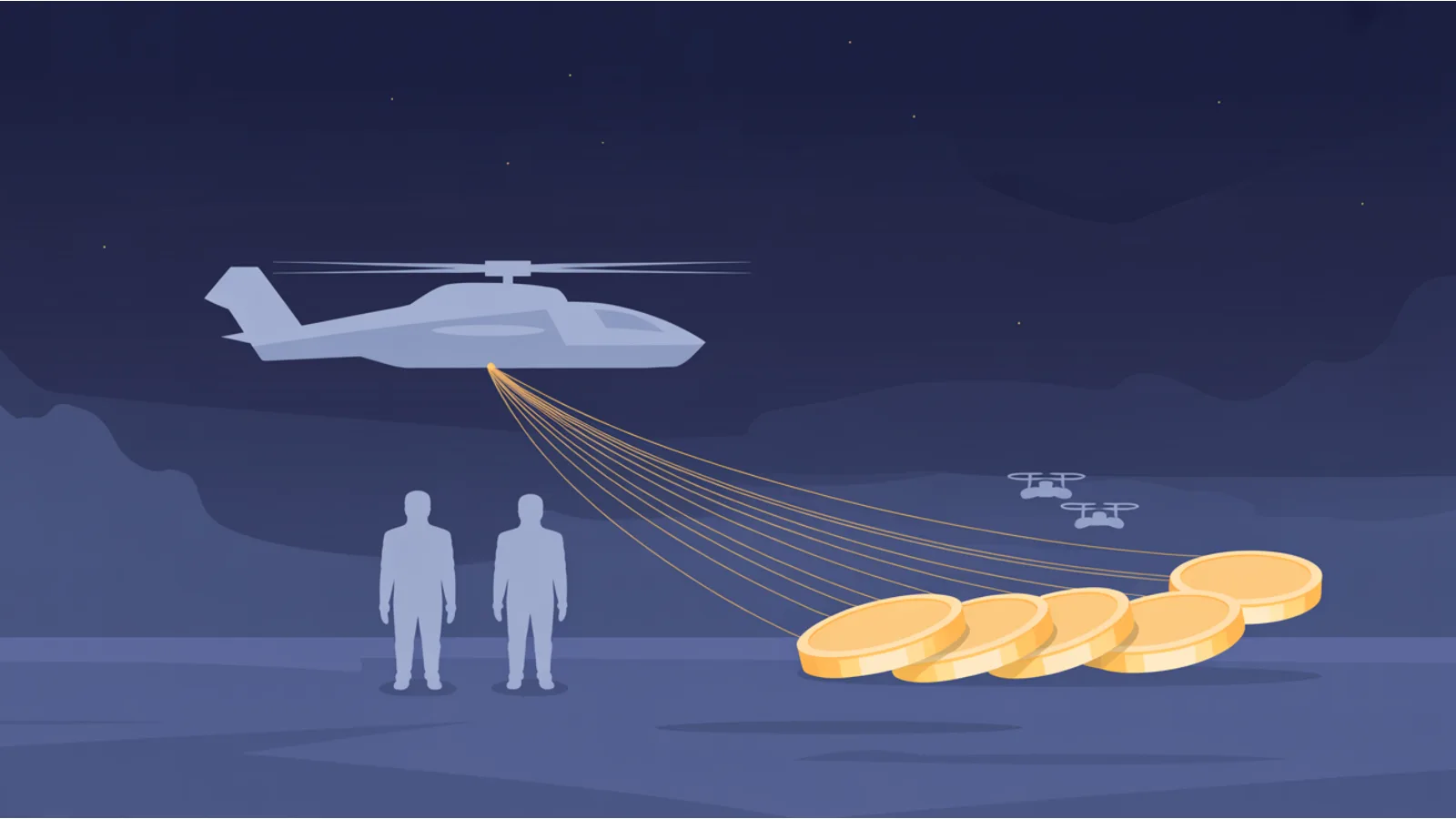
On February 23, 2004, the U.S. Army did something it rarely does: it killed its own flagship helicopter program. The RAH-66 Comanche was meant to be the future of Army aviation, a stealth armed reconnaissance aircraft designed to slip forward, find the enemy, and hand off targets to attack helicopters like the AH-64 Apache. By the day it was cancelled, the Army had spent roughly $6.9 billion in research and development and had two flying prototypes to show for it. No production aircraft were ever fielded.
That single pairing, about $6.9 billion spent against two airframes, is why the Comanche shows up on almost every list of expensive defense programs that never reached the battlefield. But the record is more interesting than the headline number, and it does not fit the usual boondoggle story. The prototypes reportedly flew well. The cancellation was not a crash or a technical collapse. It was a deliberate budget decision, and the money that had not yet been spent was rolled into a broader aviation plan rather than simply lost. This post walks through what the primary sources actually say, keeps the money spent rigorously separate from the money merely projected, and lays the honest critique and the honest defense side by side.
What the Comanche was supposed to do
The Comanche was built around one mission: armed reconnaissance. In a scout role, a helicopter flies ahead of the main force to locate enemy positions and designate targets, then either engages light targets itself or passes coordinates to heavier attack aircraft. The Congressional Research Service described the RAH-66 as the first helicopter designed and developed specifically for that armed reconnaissance mission, which tells you how central the requirement was to the Army's thinking.
To do that job against a modern air-defense threat, the design leaned on stealth: a reduced radar signature, internal weapons bays, and a shrouded tail rotor, features that made it look less like a conventional scout helicopter and more like a rotary-wing counterpart to a low-observable jet. It was developed by a joint Boeing and Sikorsky team, pairing Boeing Helicopters with Sikorsky Aircraft. Both names belong on the program; it was not a single-contractor effort.
The timeline, with dates attached
The Comanche did not begin in 1991, even though that is the date most often cited. Its roots run back to the Army's Light Helicopter Experimental study, known as LHX, which began in 1982. The 1991 date refers to the development contract, not the origin of the idea.
- 1982: The LHX study begins, laying out the requirement for a next-generation light helicopter.
- April 1991: The Boeing and Sikorsky team wins the demonstration and validation contract, reported at about $2.8 billion, originally to build six prototypes.
- January 4, 1996: The first prototype makes its maiden flight.
- October 2002: A program restructuring cuts the planned buy to 650 aircraft.
- February 23, 2004: Acting Army Secretary Les Brownlee and Army Chief of Staff General Peter Schoomaker announce the program's termination.
Over roughly two decades of effort, and across about six separate restructurings, the program produced two flying prototypes, serials 94-0327 and 95-0001. The 1991 contract had envisioned six. Only two were built and flown, and both now reside at the Army Aviation Museum at Fort Rucker. No aircraft ever reached an operational unit.
The money, kept honest
This is the part of the Comanche story that is easiest to get wrong, because several very different dollar figures orbit the program and they measure different things. Keeping them distinct is the whole game.
What was actually spent: about $6.9 billion. Government Executive reported roughly $6.9 billion in research and development spent to date at the time of cancellation, and CRS reported R&D through fiscal 2003 of about $6.8 billion. This is the sunk cost, the real money that left the Treasury and produced two prototypes and a great deal of engineering knowledge, but no fielded aircraft. Some broader accountings push the figure toward $8 billion depending on which termination and prior-year costs they fold in; $6.9 billion is the best-supported number for money genuinely spent, and anything higher should be read as a wider accounting rather than the base fact.
What was projected but never spent on Comanches: about $14.6 billion. When it cancelled the program, the Army did not hand back the remaining money. It redirected roughly $14.6 billion in future Comanche funding, programmed through fiscal 2011 and earmarked to build about 121 aircraft, into a broader Army aviation plan. Government Executive, citing Acting Secretary Brownlee, described that plan as buying about 796 new aircraft, upgrading roughly 1,400 existing helicopters, and expanding unmanned aircraft. This $14.6 billion is projected future budget that was redirected, not money that was spent and not money that was wasted. It should never be added to the $6.9 billion to manufacture a larger total. Termination costs themselves were estimated at $450 million to $680 million.
What full production would have projected to cost: $26.9 billion, and a peak estimate near $39 billion. The planned buy shrank dramatically over the program's life, from an early vision of thousands of aircraft, figures like 5,023 and later 1,213 appear in the record, down to 650 aircraft after the October 2002 restructuring. According to CRS, projected production cost was cut from about $39.3 billion to $26.9 billion in that restructuring. The Washington Post's memorable label, the "$39 billion helicopter," refers to that peak projected total program estimate. These are projected procurement figures for aircraft that were never built. They are not money spent, and citing $39 billion as though it were the cost incurred is the single most common error in retellings of this program.
So the honest ledger reads: about $6.9 billion spent, about $14.6 billion in future funding redirected elsewhere, and projected full-production estimates in the $26.9 billion to $39 billion range that never came to pass.
Why the Army pulled the plug
The Comanche was not cancelled because it failed to fly. By the accounts of people close to the program, the prototypes flew well. It was cancelled because the strategic and budgetary case for it had eroded.
The Government Accountability Office had raised affordability concerns for years. The most-cited GAO warning, drawn from secondary summaries of its work rather than a verbatim primary quote, held that at planned funding levels the Comanche would consume nearly two-thirds of the Army's entire aviation budget by fiscal 2008. A single program crowding out that much of a service's aviation account is the kind of concentration that invites hard questions in any budget cycle.
At the same time, the mission the Comanche was designed for was changing underneath it. The aircraft was conceived for a Cold War threat environment that had largely disappeared. Lessons from Afghanistan and Iraq, combined with rapidly maturing unmanned aircraft, made a different bet look more attractive: rather than field an expensive, crewed stealth scout, the Army could push armed reconnaissance increasingly onto drones that were cheaper and did not put a pilot forward, while spending the freed-up money to modernize the helicopters it already owned. The Army framed the decision in exactly those terms, arguing the RAH-66 would need numerous upgrades to survive on the modern battlefield and that investing in existing helicopters and unmanned systems was a better use of the money.
Part of the redirected funding flowed toward unmanned aircraft such as the RQ-7 Shadow and the MQ-1C Gray Eagle, and toward buying new conventional helicopters including additional Black Hawks. Those are downstream destinations for the reallocated dollars, not Comanche costs, but they show what the Army chose to buy instead.
The honest critique and the honest defense
The critique. Measured purely as return on outlay, the Comanche is a sobering case. The Army spent roughly $6.9 billion across more than two decades of effort and had exactly two flying prototypes and zero operational aircraft when it stopped. The planned buy collapsed from thousands of aircraft to 650, unit costs climbed, the program was restructured about six times, and GAO had flagged that it would swallow a large share of the Army's aviation budget. That is a textbook requirements-creep and affordability-squeeze trajectory. Taxpayers funded more than a decade of development and received two museum pieces and institutional knowledge, not a capability in the field. A U.S. Army War College paper on the program carries the pointed title "The Self-Inflicted Termination," which captures how much of the outcome traced to choices inside the program rather than to enemy action or physics.
The defense. Two fairness points sit alongside that critique, and they matter. First, armed reconnaissance was and remains a real warfighting need; the money was not spent chasing a frivolous requirement. Second, and more importantly, the cancellation was disciplined portfolio management rather than a program that collapsed under its own weight. The prototypes flew. The Army looked at a program whose strategic rationale had faded, whose cost was set to dominate its aviation account, and whose mission cheaper drones could increasingly cover, and it chose to stop rather than chase sunk costs to production. It then redirected the roughly $14.6 billion in future funding into upgrading about 1,400 existing helicopters, buying about 796 new aircraft, and expanding unmanned systems. The reconnaissance gap was subsequently addressed, largely by unmanned aircraft and upgraded existing helicopters, just by different and often cheaper means.
The fair verdict is not that the Comanche was a fraud or a fiasco. It is that the Army wrote off a costly research-and-development investment and made a rational decision to stop, redirecting the remaining money rather than burning it. Both of those things are true at once, and a serious oversight account has to hold them together rather than collapse the story into a single number or a single villain.
Fact-check notes and sources
- Mission and role (armed reconnaissance scout for attack helicopters like the AH-64 Apache): Congressional Research Service report RS20522, "Army Aviation: The RAH-66 Comanche Helicopter Issue," which describes it as the first helicopter developed specifically for the armed reconnaissance mission. CRS RS20522
- Boeing and Sikorsky joint development team; LHX origin in 1982; April 1991 contract of about $2.8 billion for six prototypes; first flight January 4, 1996; two prototypes built (serials 94-0327 and 95-0001): consolidated timeline cross-checked against CRS. Boeing-Sikorsky RAH-66 Comanche, Wikipedia
- Cancellation on February 23, 2004 by Acting Army Secretary Les Brownlee and General Peter Schoomaker; about $6.9 billion in R&D spent; roughly $14.6 billion in future funding redirected to about 796 new aircraft, about 1,400 upgrades, and unmanned aircraft; termination costs of $450 million to $680 million: Government Executive, February 2004
- Shrinking planned buy (from thousands down to 650 after the October 2002 restructuring) and projected production cost cut from about $39.3 billion to $26.9 billion: CRS RS20522. These are projected procurement figures, distinct from money spent. CRS RS20522
- GAO affordability warning (Comanche would consume nearly two-thirds of the Army's aviation budget by fiscal 2008): referenced to GAO work (report NSIAD-99-146) via secondary summaries; treated here as well-corroborated rather than a verbatim primary quote. Wikipedia summary of GAO warning
- DoD acquisition-management review of the program: Department of Defense Inspector General report D-2003-087, "Acquisition Management of the RAH-66 Comanche," cited as a known primary source. DoD IG D-2003-087
- "The Self-Inflicted Termination" characterization and the roughly 22-year, six-restructuring framing: U.S. Army War College paper via DTIC. DTIC ADA564477
Related reading
- Army Future Combat Systems: the larger "system of systems" modernization effort that shared the Comanche's era and its fate, a natural companion to this piece.
- The Aerial Common Sensor cancellation: another Army program stopped before fielding, this one over airframe and weight problems.
- The VH-71 Marine One helicopter: a separate cancelled rotorcraft program and a useful comparison in how projected costs balloon.
- The GAO High-Risk List and improper payments: the oversight lens through which affordability warnings like the ones on Comanche get raised.
- The public-money programs index: the full set of "where the public money goes" explainers.
This post is informational and journalistic, not legal or financial advice. It describes public programs and documented events; mentions of third parties are nominative fair use and no affiliation is implied.
