
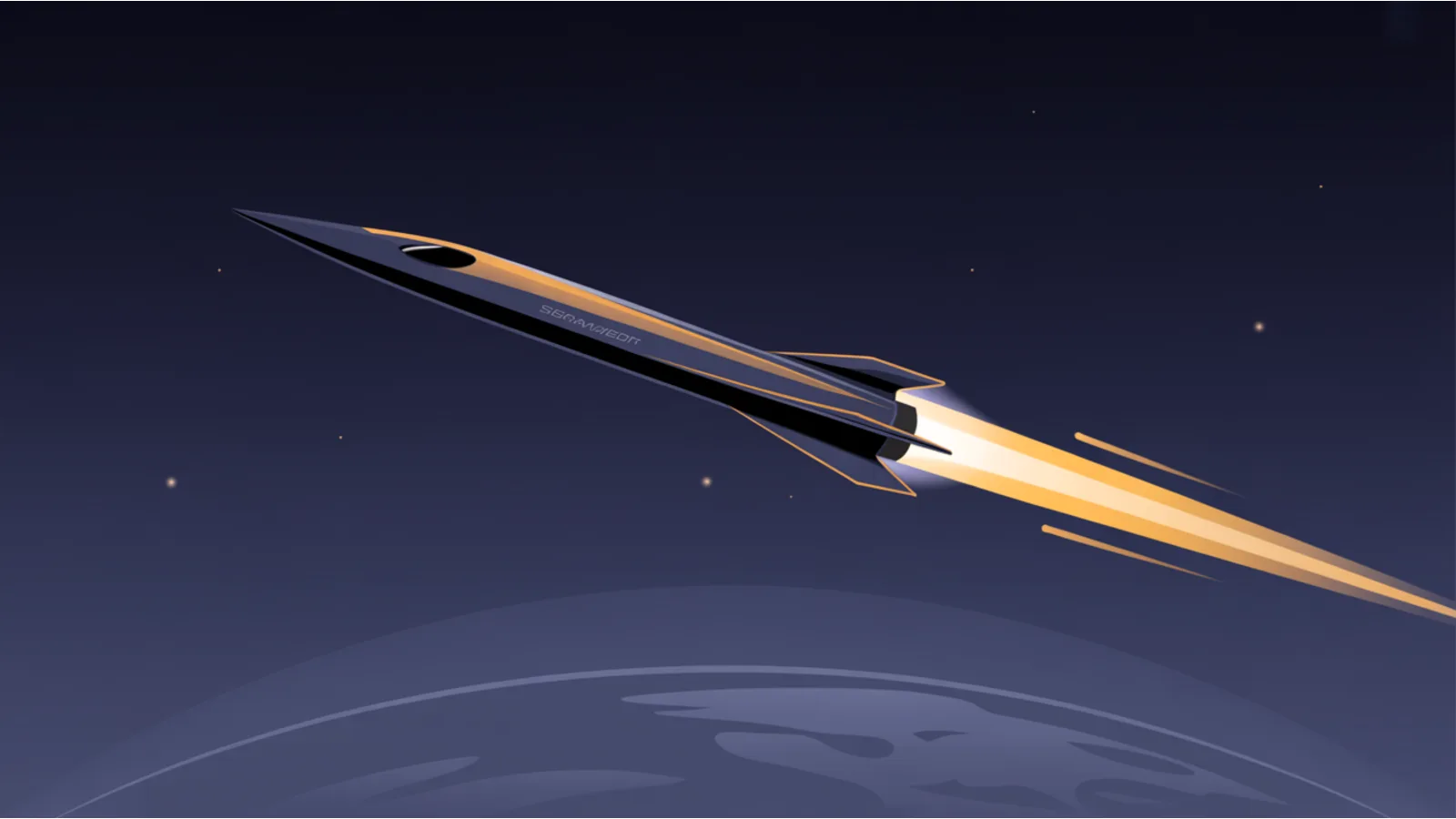
An air-breathing engine that works at five times the speed of sound sounds like a contradiction. At those speeds air rushes through the engine so fast that the fuel has only milliseconds to mix, ignite, and burn while the flow itself stays supersonic. For decades that was theory, wind-tunnel data, and a handful of flights measured in seconds. The question that mattered for any future hypersonic cruise weapon was simple to state and hard to answer: can a scramjet actually sustain hypersonic flight in the real atmosphere, long enough to matter?
Between 2010 and 2013 an Air Force Research Laboratory program called the X-51A Waverider tried to answer it. On a narrow scorecard the program looked like a struggle: four flight vehicles, one partial success, two outright failures, and then, on the last airframe it had, a single clean win. That win, on May 1, 2013, was the longest air-breathing hypersonic flight of its kind, and its data now feeds the hypersonic cruise-missile programs the United States is fielding today. This post lays out both sides of that ledger: the failure count and the cost on one side, the milestone and the return on a high-risk research bet on the other.
What the X-51A was, and what it was not
The X-51A Waverider was an unmanned experimental hypersonic demonstrator managed by the Air Force Research Laboratory, specifically its Aerospace Systems Directorate. It was a cooperative effort, not a one-company product. Boeing's Phantom Works provided program management, airframe design, and integration. Pratt and Whitney Rocketdyne built the scramjet engine, designated the SJY61. DARPA and NASA had roles in the program's earlier roots. According to the U.S. Air Force fact sheet and Boeing's own account, AFRL led the effort with USAF, DARPA, NASA, Boeing, and Pratt and Whitney Rocketdyne all contributing. It is accurate to call it an AFRL program. It is not accurate to call it a Boeing program or a DARPA program.
The propulsion is what made it interesting. A scramjet, short for supersonic-combustion ramjet, is an air-breathing engine. It scoops atmospheric oxygen from the air at hypersonic speed and burns it, rather than carrying its own oxidizer the way a rocket does. That is why the X-51A needed a solid rocket booster only to reach ignition speed, not to fly the whole profile. Once moving fast enough, the scramjet took over and burned jet fuel using air from the sky. The X-51A carried JP-7 fuel, roughly 270 pounds of it, and used a mixture of ethylene and JP-7 to light the engine before switching to JP-7 alone.
Two distinctions matter, because coverage routinely blurs them.
- X-51A is not the same as HTV-2. The DARPA and Air Force Hypersonic Technology Vehicle 2 was a rocket-boosted, unpowered glide vehicle with no engine at all. It flew twice, in April 2010 and August 2011, and both flights ended in loss of control. Both HTV-2 and X-51 were hypersonic and both were discussed using the "waverider" aerodynamic concept, but their propulsion is fundamentally different. The X-51 has an engine that burns air. HTV-2 glided.
- X-51A's record is about duration, not top speed. NASA's earlier X-43A scramjet reached roughly Mach 9.6, far faster than the X-51, but only for a matter of seconds. The X-51's claim is the longest sustained air-breathing hypersonic flight, which is a different record entirely.
The X-51A was a research demonstrator. It carried no warhead and was never operational. Its purpose was to produce data, not to be a weapon.
The money and the timeline
The X-51A is widely reported as a roughly $300 million technology-demonstration effort with origins around 2004, using four flight-test vehicles. Two of those figures deserve care. The four vehicles are firm and confirmed. The dollar figure and the start date are summary figures reported by outlets such as GlobalSecurity.org, not an audited Government Accountability Office appropriation, so they should be read as order-of-magnitude program cost and program-roots timing rather than a precise number. It is also worth noting that the X-51 designation itself dates to September 2005. Treat "$300 million" and "2004" as approximate.
What is well documented is the flight record itself, four flights across four years, and it is a genuinely mixed one.
First flight, May 26, 2010: partial success. A B-52 released the vehicle, a booster took it to about Mach 5, and the scramjet ran under power for roughly 140 seconds of a planned 300 before the flight ended early. Total flight time was over 200 seconds. It was assessed as a partial success and set the program's pre-2013 record. Note the peak here was about Mach 5.0, not 5.1. It was the first extended scramjet-powered flight of its kind, but it fell short of the planned burn.
Second flight, June 13, 2011: failure. After boost to around Mach 5, as the engine tried to transition from ethylene to JP-7, the inlet suffered an "unstart," a disruption of the supersonic airflow feeding the engine. The scramjet never settled into steady JP-7 operation and the vehicle was lost.
Third flight, August 14, 2012: failure. This one failed before the engine ever lit. About fifteen seconds after release, the upper-right aerodynamic control fin unlocked. All four fins were needed for control, and the vehicle became uncontrollable and broke apart before the scramjet could ignite. The cause was traced to the fin unlock, an airframe and control problem, not an engine problem.
At that point the program had spent three of its four vehicles and had no clean win. One airframe remained.
May 1, 2013: the record flight
The last flight worked, and it worked fully.
A B-52H from Edwards Air Force Base released the X-51A at about 50,000 feet over the Point Mugu Sea Range off the California coast. A solid rocket booster accelerated it to roughly Mach 4.8. After booster and interstage separation, the scramjet lit and carried the vehicle to about Mach 5.1. It burned for roughly three and a half minutes, about 210 seconds, until it exhausted its JP-7 fuel. The vehicle flew for more than six minutes total and covered more than 230 nautical miles before its planned splashdown in the Pacific.
Boeing described it as "the longest air-breathing, scramjet-powered hypersonic flight in history," with "three and a half minutes on scramjet power at a top speed of Mach 5.1." The Air Force Materiel Command account framed the 2013 flight as exceeding the previous record the program had set in 2010, which is why the Mach 5.1 figure belongs to this flight and not the earlier one. All mission objectives were met.
A note on the clocks, because three different numbers get conflated. The scramjet burn was about 210 seconds, roughly three and a half minutes. Telemetry ran for about 370 seconds. Total flight time was over six minutes. Those are three separate measures of the same flight, and the burn number is the one that carries the record.
Two of the primary U.S. government sources for this flight, the af.mil fact sheet and the AFMC article, currently return HTTP 403 to automated retrieval. Their figures were confirmed against Boeing's press release and Space.com's contemporaneous coverage, so they remain citable, with that access limitation flagged.
Where the data went
The X-51A produced no fielded weapon. What it produced was a data point, and by 2013 that data point retired a fundamental technical risk: it showed that a scramjet could sustain hypersonic cruise in the real atmosphere for minutes, not seconds.
Defense press and program histories characterize the X-51's propulsion, aeroheating, and boundary-layer data as underpinning current U.S. air-breathing hypersonic cruise-missile efforts, including the DARPA and Air Force Hypersonic Air-breathing Weapon Concept, known as HAWC, and the follow-on Hypersonic Attack Cruise Missile, or HACM. HAWC flew successfully in 2021 and 2022 and HACM is now the program of record.
That lineage is worth stating precisely, because it is an analytical characterization rather than a single primary citation. HAWC used a Raytheon airframe with a scramjet built by Northrop Grumman, not by Pratt and Whitney Rocketdyne. Any direct hardware descent from the X-51's SJY61 engine to later engines is reported only as something that "may have been derived." The honest claim is that X-51 influenced these programs through the knowledge and data it produced, not that its engine is the direct ancestor of theirs. What X-51 did was answer the enabling question, and that answer made the follow-on programs credible.
The honest critique and the honest defense, side by side
The critique on cost and record. On a narrow scorecard the X-51A looks like a struggling program. Of four flights, the first was only partial, and the next two were failures, a 2011 inlet unstart and a 2012 control-fin malfunction that killed the vehicle before the engine even lit. Three of four vehicles in a roughly $300 million program were expended without a clean win, and the sole full success came on the last airframe, meaning there was no reserve to fly again had it failed too. There was a long gap between the concept's origins in the mid-2000s and a single record flight, and the program produced no operational weapon. Judged as procurement, that is a fair set of complaints.
The defense on what flight research is. The X-51A was a research demonstrator, and in high-risk flight research, failure is the expected cost of learning. Each failed flight returned real diagnostic data. The inlet unstart and the control-fin failure were both understood and engineered around, and the program's job was never to field a weapon. It was to answer one question: can an air-breathing scramjet sustain hypersonic cruise in the real atmosphere? On May 1, 2013 it answered yes. For a roughly $300 million public research bet, buying down the core uncertainty behind an entire class of follow-on weapons is a strong return. The honest frame here is a hard-won win, not a boondoggle. The failure count is real, and so is the milestone, and the milestone is the reason the program is remembered.
Both readings are true at once. That is the point of a mixed record: the losses were informative, the final flight was genuine, and the value showed up not in a weapon on a rail but in the risk it retired for everything that came after.
Fact-check notes and sources
- AFRL managed the program through its Aerospace Systems Directorate; it was a cooperative effort with USAF, DARPA, NASA, Boeing, and Pratt and Whitney Rocketdyne. Wikipedia states the program was managed by the Aerospace Systems Directorate within the U.S. Air Force Research Laboratory; the official U.S. Air Force X-51A fact sheet describes the same (this .mil page returns 403 to automated fetch; attribution confirmed via search-index summary and corroborating sources). See also Boeing's press release and Wikipedia: Boeing X-51 Waverider.
- Boeing provided airframe and integration; Pratt and Whitney Rocketdyne built the SJY61 scramjet; DARPA and NASA had earlier roles. Boeing press release; collaborator list and engine designation per Wikipedia. Boeing is the airframe contractor, not the scramjet builder.
- A scramjet is an air-breathing supersonic-combustion ramjet; the X-51 burned JP-7 (about 270 lb) and needed a booster only to reach ignition speed. Standard propulsion definition; fuel and capacity per Wikipedia.
- Roughly $300 million program, origins around 2004, four flight vehicles. Four vehicles is confirmed; the cost and start date are widely reported summary figures per GlobalSecurity.org, not an audited GAO appropriation, and the X-51 designation itself dates to September 2005. Presented as approximate.
- First flight May 26, 2010: partial success, about Mach 5, scramjet under power roughly 140 of a planned 300 seconds. Peak Mach here was about 5.0, setting the pre-2013 record. Wikipedia.
- Second flight June 13, 2011: failure from an inlet unstart during the transition to JP-7. Wikipedia.
- Third flight August 14, 2012: failure when the upper-right control fin unlocked shortly after release, before scramjet ignition. Wikipedia.
- Fourth flight May 1, 2013: full success, about Mach 5.1, scramjet burn about 3.5 minutes (roughly 210 seconds), more than six minutes total flight, more than 230 nautical miles, released at about 50,000 feet by a B-52H over the Point Mugu Sea Range, booster to about Mach 4.8. Boeing press release and the Air Force Materiel Command article (the AFMC .mil page returns 403 to automated fetch; figures confirmed via Boeing and Space.com).
- It was the longest air-breathing hypersonic flight of its kind. Boeing's language, "longest air-breathing, scramjet-powered hypersonic flight in history"; a duration record distinct from NASA's X-43A speed of about Mach 9.6 for seconds. Boeing.
- X-51 data is characterized as underpinning HAWC and HACM. This is an analytical lineage claim by defense press, not a primary hardware chain; HAWC's scramjet was Northrop Grumman's, and any SJY61 hardware descent is reported only as "may have been derived." Warrior Maven. Stated as data and knowledge influence, not proven hardware descent.
- X-51 (air-breathing scramjet) must not be conflated with HTV-2 (rocket-boosted unpowered glide vehicle), which flew and failed in April 2010 and August 2011. Wikipedia.
Related reading
- DARPA's HTV-2 hypersonic glider: the rocket-boosted glide vehicle that is routinely confused with the X-51 but used no engine at all.
- The Airborne Laser (YAL-1): another high-cost, high-risk defense research effort, and a useful contrast in how these bets pay off or do not.
- DARPA and AFRL portfolio: hits and misses: the overview that places the X-51 alongside the rest of the government research ledger.
- The public-money programs index: the full "where the public money goes" series.
This post is informational and journalistic, not legal or financial advice. It describes public programs and documented events; mentions of third parties are nominative fair use and no affiliation is implied.
