
Picture a two-star general from a partner nation sitting in a seminar room in Garmisch, a resort town tucked under the Bavarian Alps, working through a case study on transnational crime with a colonel from one country on his left and an American civilian from the State Department on his right. None of them fired a shot to get there. They were invited, flown in, housed, and taught by a Defense Department funded institution called the George C. Marshall European Center for Security Studies, one of six such centers the Pentagon runs around the world. Together the six make up the Regional Centers for Security Studies, and they cost about $108.8 million enacted in fiscal year 2025. That figure buys the room, the faculty, the research, and a standing alumni network the United States can call on for decades. It is also, by the government's own admission, one of the hardest defense programs to prove worked.
Six schools, one mission
The Regional Centers for Security Studies are DoD funded academic and engagement institutions authorized by Title 10 of the U.S. Code, Section 342. They run executive-level courses, produce region-focused research, and maintain lifelong alumni networks for senior foreign and U.S. military, civilian, and security officials. The stated purpose is not to teach tactics. It is to build relationships and partner capacity that support U.S. security cooperation and the National Defense Strategy, the kind of quiet groundwork that pays off years later when a partner government picks up the phone.
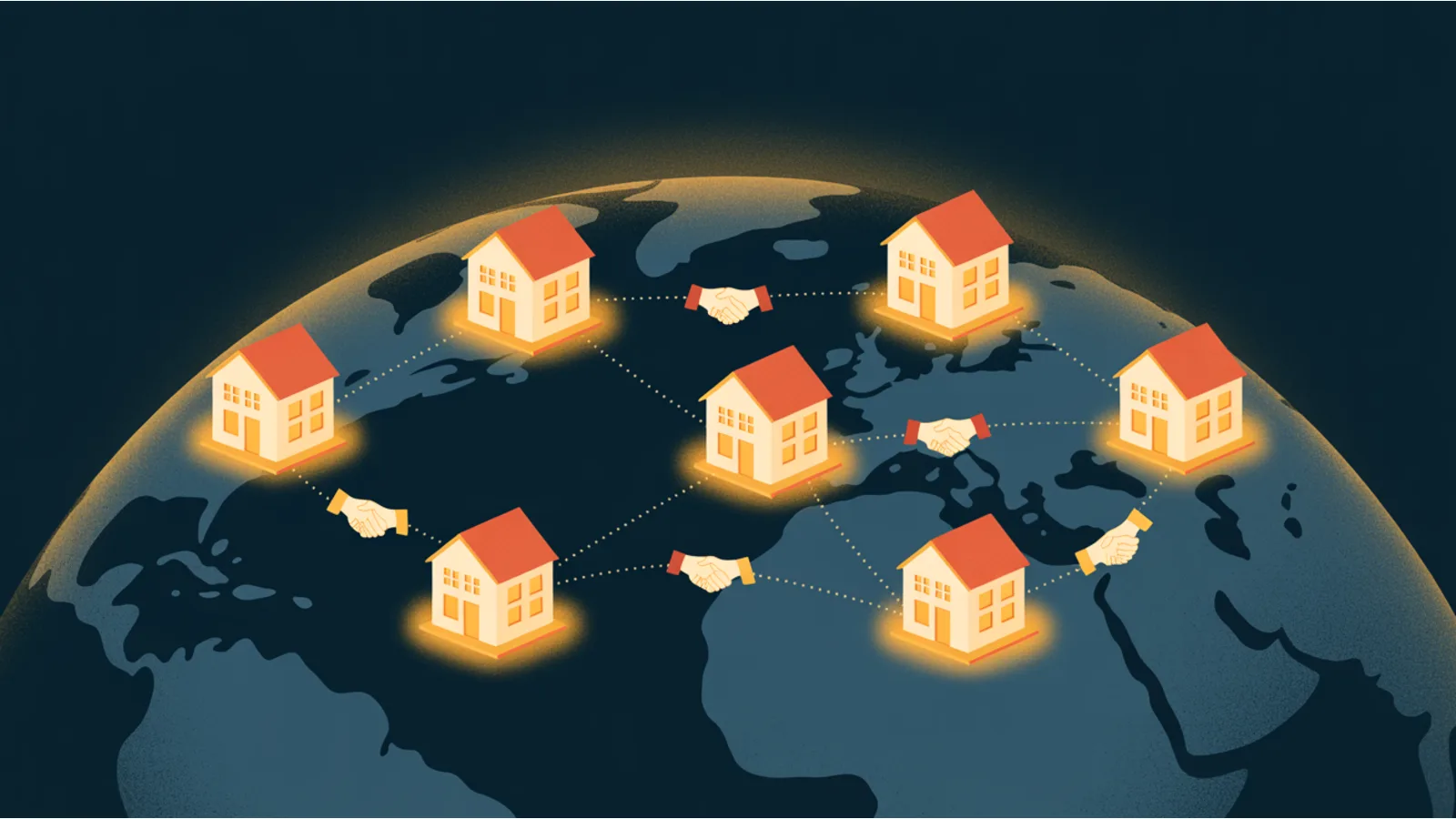
There are six centers, spread across the map by region. The George C. Marshall European Center sits in Garmisch, Germany. The Daniel K. Inouye Asia-Pacific Center operates out of Honolulu. The William J. Perry Center for Hemispheric Defense Studies and the Africa Center for Strategic Studies are both based in Washington, as is the Near East South Asia Center. The newest, the Ted Stevens Center for Arctic Security Studies, stood up in 2021 and works out of Anchorage, a placement that tracks the growing strategic attention on the Arctic. Five of the six are long-established. The sixth is the Pentagon's bet that the next contested region is the one at the top of the globe.
The people who move through these classrooms are not junior officers. They are drawn from many ministries and are mostly senior, the kind of officials who will run their countries' defense and security establishments in a decade. That is the whole design. You spend a modest amount now to educate the people who will hold power later, and you keep in touch.
The Executive Agent behind the curtain
Someone has to own the budget, the payroll, and the paperwork for six institutions scattered across three continents. That someone is the Defense Security Cooperation Agency, or DSCA. Under DoD Directive 5200.41E, "DoD Regional Centers for Security Studies," dated June 30, 2016 and signed by then Deputy Secretary of Defense Robert O. Work, the Director of DSCA is designated the DoD Executive Agent for the centers. Paragraph 1.b of the directive makes the designation explicit, and the directive assigns the Director, acting in that Executive Agent capacity, responsibility for the programming, budgeting, financial management, and civilian staffing of the centers. Policy oversight stays with the Under Secretary of Defense for Policy, who manages through DSCA. The official DSCA Regional Centers program page lists the same arrangement in plainer language.
A couple of wrinkles are worth flagging for accuracy. The 2016 directive enumerated only five centers, because the Ted Stevens Center did not yet exist. It was authorized later and stood up in 2021, and current budget documents confirm DSCA is the Executive Agent for all six. The directive also cited the older statutory authority, 10 U.S.C. Section 184, which is the citation in force when it was signed. The fiscal year 2017 National Defense Authorization Act recodified that authority into Section 342, which is why today's budget books and this article cite 342 rather than 184. The registry designation itself, not a memory of it, is the thing to trust: DSCA is the Executive Agent because the directive says so.
The money, to the thousand
The clean numbers live in one place: the FY2026 DSCA Operation and Maintenance budget justification, the document budget analysts call the OP-5. It is hosted on comptroller.war.gov, a URL that reflects the department's 2025 rename to the Department of War, though the money and the mission are unchanged. Page 8 of that book carries the financial summary for the Regional Centers line, and the figures are precise enough to reconcile.
For FY2024, the centers obligated $107.879 million. That is money actually spent. For FY2025, the enacted figure is $108.814 million, money appropriated and available. And for FY2026, the department is requesting $82.540 million. That last number is a request, not an appropriation, and it should be kept in its own column until Congress acts. It represents a drop of about 24 percent from the enacted FY2025 level, and the budget ties that drop to stated workforce and efficiency reductions rather than to any finding of waste. The book itemizes them: an efficiency-travel cut of roughly $3.7 million, a workforce optimization cut of $2.0 million and 14 full-time positions tied to a federal workforce executive order, and a larger contract-support reduction of nearly $19.8 million meant to align the centers to the 2025 defense strategy guidance.
The internal arithmetic holds, which is a good sign the figures are real rather than rounded guesses. The FY2025 budget request was $108.617 million. Net congressional action added $0.197 million, and $108.617 million plus $0.197 million equals the $108.814 million enacted. One honest nuance: that $0.197 million is the net figure. The books show an explicit one-time congressional program add of $1.0 million for the centers, netted down by other congressional and general-provision reductions to the plus $0.197 million that appears on the summary line. The prior year's book fills in the earlier history, showing an FY2024 baseline of $105.475 million supporting 333 civilian full-time positions and $97.804 million obligated in FY2023. Across those years the program runs roughly $100 million to $109 million a year.
Then there is the reach. DSCA reports tracking more than 89,000 alumni across 193 countries, but that figure counts graduates of the Regional Center programs together with other DoD and partner educational institutions. The count tied specifically to the Regional Centers, stated in the same document, is more than 70,000. Either way, the network is large, and it is overwhelmingly composed of senior officials. That reach is the asset the money is really buying.
The value nobody could measure
Here is the honest critique, and it is not a fraud story. It is a measurement story. In June 2013 the Government Accountability Office published report GAO-13-606 and found that the Department of Defense had not developed measurable goals and objectives for the Regional Centers, had not built metrics for assessing their performance, and had no methodology for judging the centers' progress. Translated out of audit language, that meant the department was spending roughly $100 million a year and could not show, in any rigorous way, what the country got for it. A 2014 RAND Corporation evaluation reached a parallel conclusion, finding that impact-oriented data collection was weak and would have to be built up methodically over time rather than assumed to exist.
To the department's credit, it responded. DoD issued performance guidance around 2015, and GAO later closed both of its recommendations as implemented. But issuing metrics and proving impact are different achievements. The core problem with a relationship-building program is that its payoff is inherently hard to quantify. When a partner nation's defense minister, twenty years after a course in Garmisch or Honolulu, chooses to cooperate with Washington rather than a rival, no ledger can cleanly attribute that decision to a seminar. The benefit is real and diffuse at the same time, which is exactly the condition auditors are trained to distrust. And the FY2026 request, by trimming the centers and their staffing as an explicit efficiency measure, is in its own way an admission that the program's value is easier to cut than to defend with a number.
The cheapest access in the building
Now the honest defense, which is just as strong. The centers are cheap next to hardware. About $108 million a year is a rounding error in a defense budget near $850 billion. A single advanced fighter costs more than the annual budget of all six centers combined. For that rounding error, the United States buys durable access to tens of thousands of foreign security officials, most of them senior, drawn from many ministries, in regions the country cannot easily reach through any other channel. You do not get a defense minister of a partner nation to spend two weeks in a classroom with American faculty by buying a weapon system.
The 2014 RAND study, the same one that flagged the weak measurement, also identified 24 distinct ways the centers advance U.S. interests. They build partner capacity. They form relationships. They foster favorable views of the United States. They host regional dialogue that can lower tensions between neighbors who otherwise would not sit in the same room. Those are not small things, even if none of them fits neatly on a performance dashboard. And on the narrow question of waste, the record is unusually clean. A DoD Inspector General evaluation, DODIG-2020-090, published in June 2020, found zero questioned costs and issued zero recommendations. For a federal program, a clean bill of health from the Inspector General with nothing to fix is close to as good as the paperwork gets.
Reading the ledger
So set the two verdicts side by side and let them stand. The Regional Centers for Security Studies are, on the evidence, well run, cheap, and clean. The Inspector General found nothing to question, the arithmetic in the budget book reconciles to the thousand, and the mission (educating and staying connected to the people who will run partner governments) is the sort of long-horizon investment that serious powers make. That is one true reading.
The other true reading is that the government spent years unable to prove the program worked, because its central product is a relationship, and relationships resist the metrics that justify a line item. DoD built the metrics GAO demanded, and still the deepest payoff sits beyond the reach of a spreadsheet. Now the FY2026 request would cut the line about 24 percent as an efficiency move, which tells you something quiet but real: a program with no questioned costs is not immune when the budget tightens, precisely because a benefit you cannot count is a benefit you cannot defend. Both of those are the same program. The ledger holds a clean audit and an unanswerable question on the same page, and honesty means reading both lines out loud.
Related reading
- The Western Hemisphere Institute and the School of the Americas: another DoD school for foreign officers, and a harder case on what military education buys.
- The GAO High-Risk List and improper payments: the watchdog machinery that flagged the centers' missing metrics in the first place.
- The index of programs, lifelines, and boondoggles: the full catalog this series is building, program by program.
- The working ledgers: the running notebook where these figures are checked and cross-referenced.
Fact-check notes and sources
- The load-bearing cost figures are $107.879 million obligated in FY2024, $108.814 million enacted in FY2025, and an $82.540 million request for FY2026. The FY2026 number is a budget request, not yet appropriated, and represents a drop of about 24 percent tied to stated workforce and efficiency reductions. The cross-check holds: the FY2025 request of $108.617 million plus $0.197 million in net congressional action equals the $108.814 million enacted. Source: FY2026 DSCA Operation and Maintenance Budget Estimates (OP-5), page 8.
- Earlier-year context: an FY2024 baseline of $105.475 million supporting 333 civilian full-time positions, and $97.804 million obligated in FY2023, with DSCA designated Executive Agent for all six centers authorized under 10 U.S.C. Section 342. Source: FY2025 DSCA Operation and Maintenance Budget Estimates (OP-5), pages 9 and 14. Note: the more than 89,000 alumni figure counts Regional Center graduates together with other DoD and partner institutions across 193 countries; the count tied specifically to the Regional Centers is more than 70,000.
- The measurement critique is not a fraud finding. GAO found DoD had not developed measurable goals and objectives, performance metrics, or an assessment methodology for the centers; the two recommendations were later closed as implemented. Source: GAO-13-606, Building Partner Capacity (June 2013). A parallel finding on weak impact data appears in RAND RR-388, Evaluating the Impact of the DoD Regional Centers for Security Studies (2014), which also identified 24 ways the centers advance U.S. interests.
- On waste specifically, a DoD Inspector General evaluation found $0 in questioned costs and issued 0 recommendations. Source: DODIG-2020-090, Evaluation of the DoD Regional Centers for Security Studies (June 2020), via Oversight.gov.
- The Executive Agent designation itself rests on the registry and directive: DSCA is the DoD Executive Agent for the six centers, per DoD Directive 5200.41E (June 30, 2016) and the agency's own program page. Source: DSCA, DoD Regional Centers (RC).
This post is informational and journalistic, drawn from public records and government budget documents, and is not legal, financial, or policy advice, with all figures attributed to their stated fiscal year.
