
A museum label can make a complicated financial history look like a surname.
Kress. Corcoran. Clark. The names sit quietly beneath paintings, while the businesses, purchases, family decisions and institutional compromises behind them disappear into the background. Read the credit for Edgar Degas's The Dance Class and two of those names appear together: Corcoran Collection, with William A. Clark Collection and the year 1926 inside parentheses. The painting is now at the National Gallery of Art. Those words describe successive custodians, not three interchangeable philanthropists. National Gallery object record.
The useful questions are simple. Who made the money? Who bought or donated the objects? Was money also provided to care for them? And who actually benefits after the donor, or even the original museum, is gone?
Keep researching: Download the reusable research brief, the source and image ledger, or this article as Markdown.
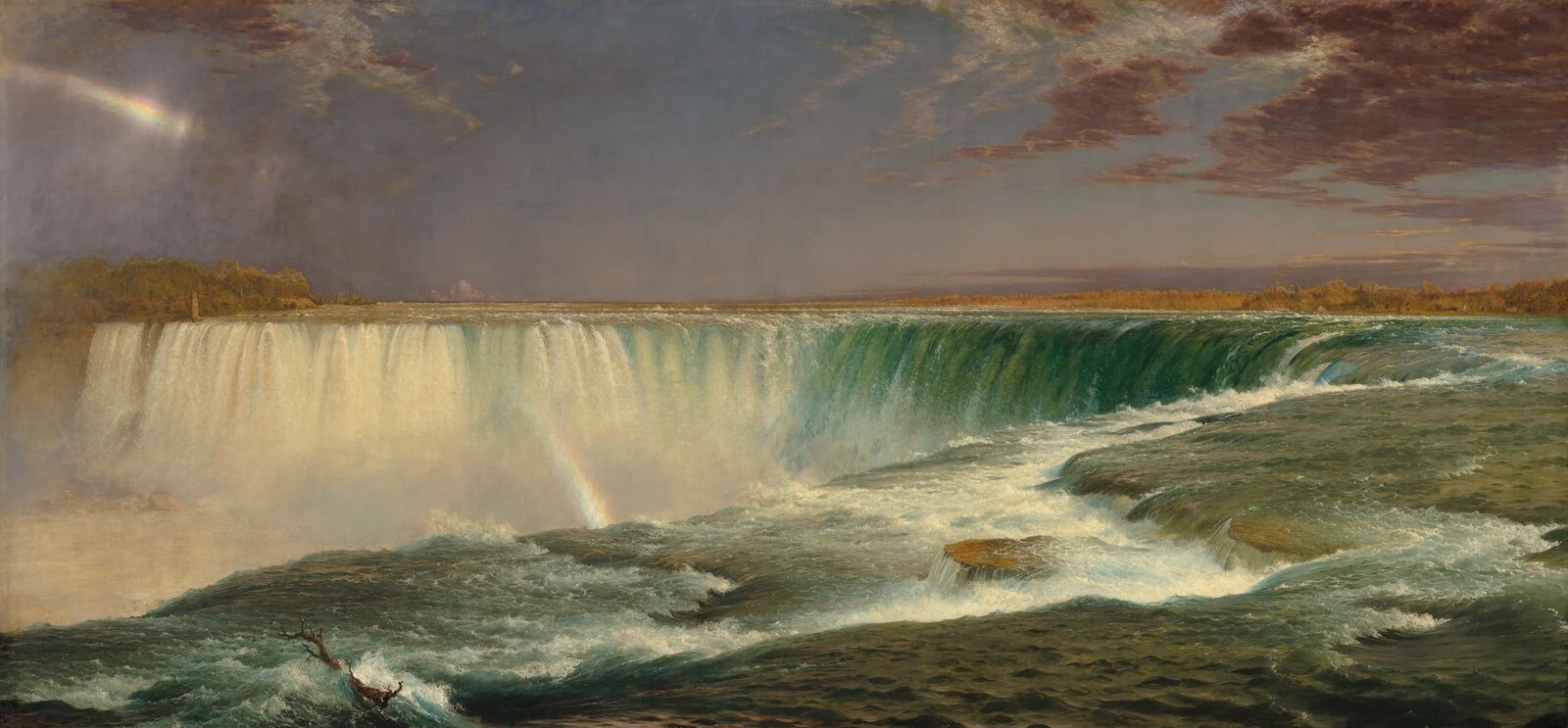
Opening image: Frederic Edwin Church, Niagara, 1857. Corcoran Collection (Museum Purchase, Gallery Fund), 2014.79.10. Courtesy National Gallery of Art, Washington. The painting is reproduced as historical artwork, not as an AI illustration.
First, separate the names
The Kress Collection is a distributed body of European art associated with Samuel H. Kress, his brothers and their foundation. It is not one museum with one annual operating budget. The foundation describes more than 3,000 works distributed between 1929 and 1961. Kress Collection overview.
The Corcoran Collection is the accumulated collection of a Washington institution founded by William Wilson Corcoran. It includes later gifts and museum purchases, not just objects he personally owned. The independent gallery closed in 2014; the National Gallery ultimately acquired more than 9,000 objects. National Gallery collection history.
William A. Clark's collection was a major bequest to the Corcoran. It is different from the Sterling and Francine Clark Art Institute in Williamstown, Massachusetts. That museum opened in 1955 and is associated with Sterling Clark's inherited Singer sewing machine fortune, not William Andrews Clark's copper fortune. Mixing them produces an attractive but incorrect family history. Clark Institute archival biography and the Frick's history of the Clark collection.
This article follows the Washington connection. The Williamstown institution deserves its own financial history.
Kress turned retail wealth into a network
Samuel Kress made his fortune through S. H. Kress & Company, the variety store chain established in 1896. The foundation was established in 1929. Its history identifies Samuel, Claude and Rush Kress as the brothers who endowed it. This was business wealth moving into philanthropy, not a collection purchased through museum ticket sales. Founder biography and foundation history.
There is a concrete link between the company and the foundation's financial assets. In its account of Genesco's 1963 acquisition, a federal appeals court recorded that 43 percent of Kress's outstanding stock was purchased from the Kress Foundation. That establishes a substantial company equity holding and sale. It does not establish a complete lifetime donation total or the sale price of every painting. The litigation concerned allegations against Genesco and its chairman; it should not be repackaged as a finding of misconduct by the foundation. Mutual Shares v. Genesco, 1967.
The distinctive philanthropic decision was distribution. Alongside the National Gallery's holdings, Kress art went to regional museums and academic institutions. The foundation's digital archive records conditions for recipient museums and explains that the gifts encouraged local fundraising for museum buildings and improvements. Kress digital archive.
That is both a success and an obligation. A community receives art it might never have purchased, but must still maintain a building, employ staff and care for the objects. The gift does not cancel those bills. The public benefit depends on what happens after the presentation ceremony.
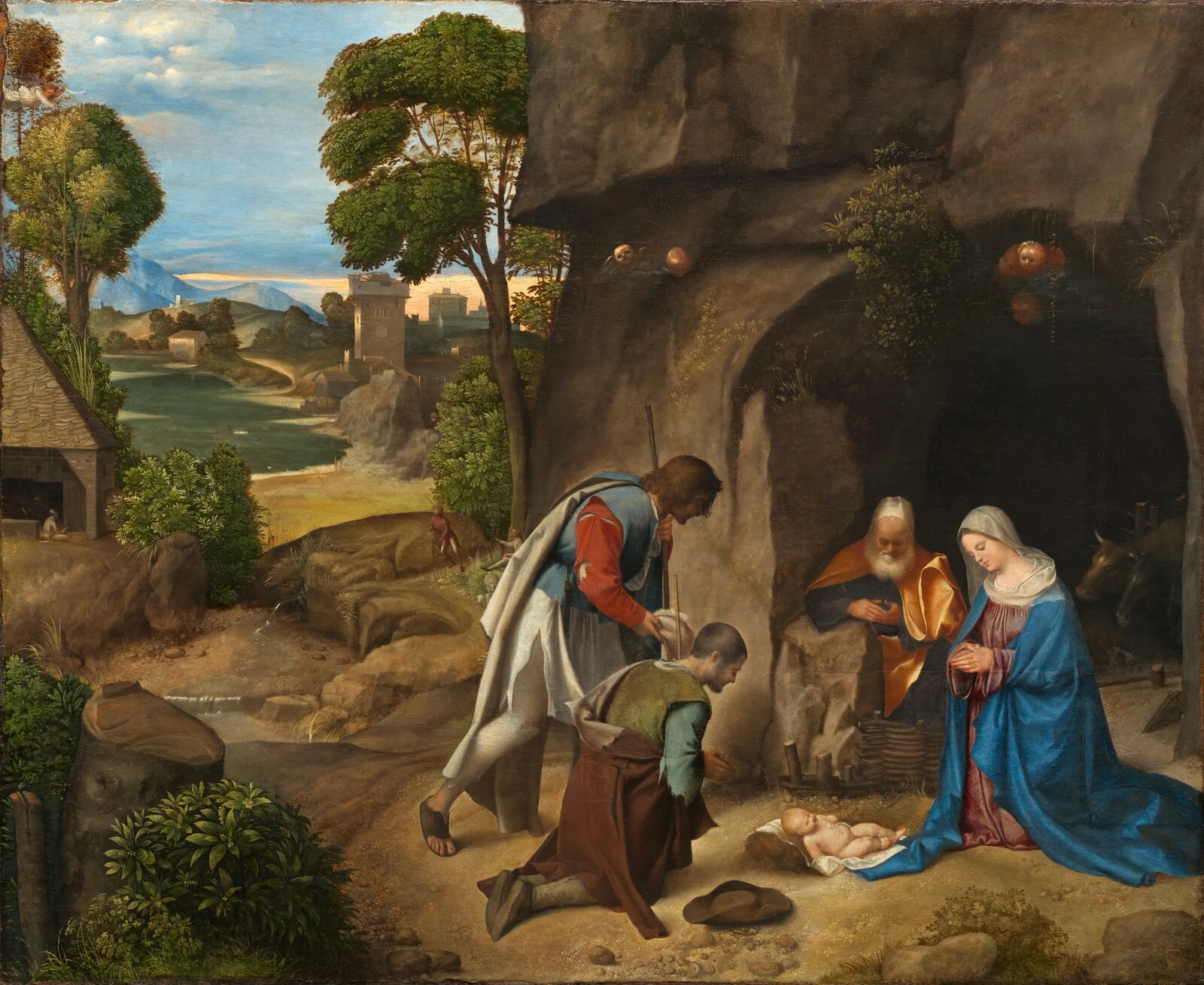
The chain for Giorgione's The Adoration of the Shepherds is unusually useful here. The National Gallery records the Allendale family ownership, a sale to Duveen Brothers in 1937, purchase by the Kress Foundation in 1938 and gift to the National Gallery in 1939. The dealer transaction and the public gift are separate events. Object provenance.
Nor should the art gifts become a substitute for business history. North Carolina's state encyclopedia records that Greensboro's Kress lunch counter integrated in July 1960 following the student protest campaign. That happened after Samuel Kress's death in 1955, a distinction worth preserving. Cultural generosity and the exclusion experienced by Black customers belong in the same broader history without inventing an individual donor's motives. NCpedia history.
What the Kress financial statements actually say
The foundation's audited statements for the year ended June 30, 2025 provide a financial snapshot, not a valuation of all donated Kress art.
| Reported category | Amount |
|---|---|
| Investments at fair value | $94,131,409 |
| Net assets without donor restriction | $93,512,349 |
| Net investment return before excise taxes | $11,172,670 |
| Grants authorized in the activities statement | $2,353,422 |
| Grants paid in the grants payable reconciliation | $2,265,113 |
Audited financial review, statements A and B and note 8.
Investment return includes realized and unrealized gains. It is not money newly raised from donors. Grants authorized and grants paid are different measures. And net assets are not a checking account or a claim that the full balance can be spent without consequence.
The foundation continues to support art historical research, conservation and professional development. The recipients include people and institutions doing that work, not only museums carrying the Kress name. Current mission.
Corcoran's money came before the museum
William Wilson Corcoran's financial career included the Corcoran & Riggs partnership and financing associated with Mexican War bonds. The Library of Congress finding aid places the partnership in 1840 and the major bond financing in 1847 through 1851. The underlying source of the fortune was finance and property, not a successful museum business. Corcoran papers.
There is an important accounting distinction here: the face value of bonds a banker markets is not the banker's profit. A credible donation history cannot copy the largest number in a financial biography and call it a museum endowment.
In 1869, Corcoran deeded the building and grounds to trustees along with his private art collection. The collection alone was then valued at $100,000. GW dates the formal public opening to 1874. GW's institutional history also records his instruction to offer two free admission days each week and charge reasonable fees on the others. His southern sympathies and absence in Europe during the Civil War are part of that same institutional account. GW history.
A later architectural history republished by GW records a $900,000 gallery endowment and another $100,000 for the school. Those are historical dollar amounts, not current balances. The text does not provide the full schedule of payments or an audited history of investment performance. Architecture DC account republished by GW.
The distinction matters: The collection valuation, historical cash gifts, and later construction finance should not be added together as though they were identical assets. The 1897 Flagg building also drew on raised funds and proceeds of his estate, according to GW's history. It was not simply financed by selling admission to the original pictures.
A famous painting can be a museum purchase
Church's Niagara, pictured above, carries the credit Museum Purchase, Gallery Fund. The National Gallery's provenance traces it through dealers, a bank and collector John Taylor Johnston before the Corcoran purchased it in 1876. It transferred to the National Gallery in 2014. Niagara object record.
That label does not identify every person who supplied money to the Gallery Fund. It does tell us not to describe this acquisition as though the painting had simply come out of Corcoran's house with the founding gift.
The honest stopping point is useful. Where the fund's underlying donor ledger has not been reviewed, say so. A familiar collection name is not evidence for a purchase price, a single payer or an unbroken ownership history.
Clark brought a copper fortune and a complicated reputation
William Andrews Clark's fortune came from the copper industry. His 1926 Corcoran bequest included more than 800 objects. The museum's collection catalogue describes paintings alongside antiquities and decorative arts, a wider inheritance than a handful of famous canvases. Antiquities to Impressionism catalogue description.
The money supplied around the gift served different purposes. WETA's historical account reports an earlier $100,000 Clark gift to endow prizes for American artists and $700,000 supplied by his heirs for the Clark Wing. Construction money is not the same thing as permanent operating support. These figures are attributed to that secondary historical account; they are not presented as a newly audited family ledger. WETA account.
His public reputation cannot be reduced to the bequest. The Senate's history records a committee conclusion against his right to the seat after an investigation of his election. Clark resigned on May 15, 1900 before the Senate voted. He later served after the 1901 election. That is not a criminal conviction or a Senate expulsion, but neither is it a minor detail to erase from a profile of the donor. Official Senate account.
The art and the political history can both matter. Appreciating a painting does not require treating the donor's career as an endorsement.
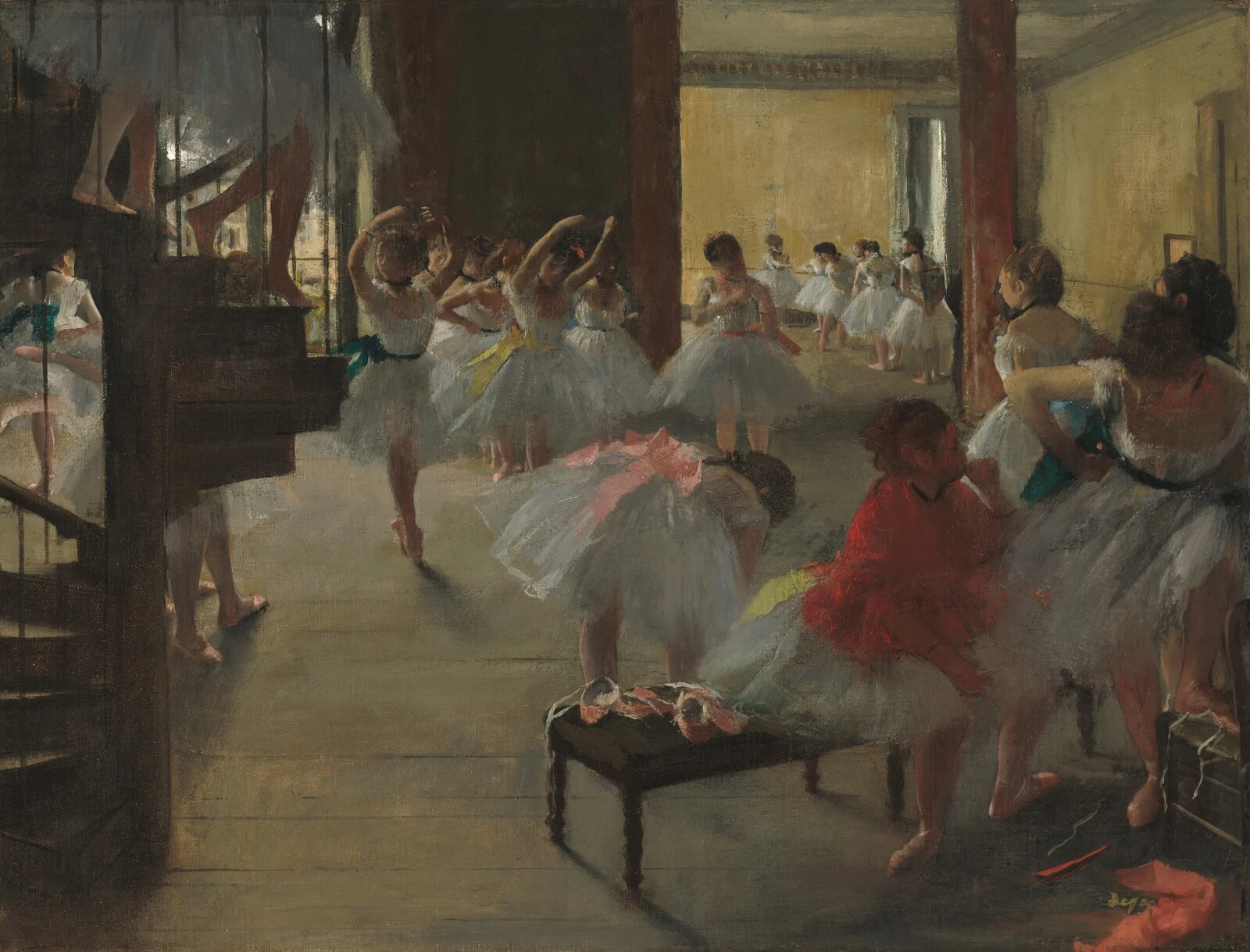
For The Dance Class, the recorded chain runs from Henry Hill through the 1889 sale and dealers to Clark's purchase in 1903, his bequest to the Corcoran in 1926 and the National Gallery's acquisition in 2014. This is the reason for the nested credit line. It preserves the Clark donation inside the later institutional transfer. Degas provenance.
These short examples follow published museum records. They are not independent title opinions or a declaration that every object in the three collections has an equally complete provenance.
The Corcoran failed as an independent institution. The art did not vanish.
A collection can remain culturally important while the institution holding it loses the ability to continue in its existing form. That is the central caution in the Corcoran story.
There were also failures of judgment and public trust before the closure. The Smithsonian's Archives of American Art preserves records of the artists' protest against the Corcoran's cancellation of Robert Mapplethorpe's The Perfect Moment in 1989. That is evidence of a documented institutional controversy, not proof that one decision alone caused the financial outcome twenty five years later. Coalition of Washington Artists records.
The 2014 restructuring should be described with equal care. GW reported receiving approximately $43 million: $35 million for renovation and $8 million in restricted endowment funds for the school. The transfer included properties, cash, securities and endowed funds after court approval. It was not a fresh $43 million fundraising campaign, and it was not all unrestricted spending money. GW's transaction announcement.
The museum's independent operation ended, while successor institutions took on different parts of its work. The National Gallery acquired more than 9,000 objects. GW's current dedicated Study Collection page lists 884 works, with teaching and research access. Its broader history page still gives a different count, so this article uses the specific collection page and retains that discrepancy in the research brief. Corcoran Study Collection.
That is neither an uncomplicated triumph nor total disappearance. Washington lost an independent museum. The art, archives and educational work continued through a different structure.
Who are the ultimate beneficiaries?
It helps to distinguish three answers.
The benefactors are the people and entities that supplied art, money, land or securities. Here that includes the Kress brothers and foundation, Corcoran, Clark, Clark's heirs, and later contributors whose names require the relevant gift or fund record.
The institutional recipients hold the objects or financial assets and assume their responsibilities. They are not interchangeable with the donor's descendants. A surname on a painting does not tell us that a family still owns it, earns income from its display or controls a current endowment.
The public beneficiaries include visitors, students, researchers, artists and conservators. Their benefit is access, education and preservation, rather than a cash distribution. The National Gallery's open access image policy even makes some of that inheritance usable beyond the museum: the public domain reproductions in this article are available under its CC0 policy. Image policy.
The donor also receives a lasting public name. That reputational benefit is visible. It does not, on its own, prove a private motive or settle the ethics of how the fortune was accumulated.
My measure of success would be more demanding than a large gift announced once. Can people still encounter and study the work? Is its provenance understandable? Is its care funded? Can the institution explain what changed when the original plan no longer worked?
Kress shows the reach of distributing art and supporting its study. Corcoran shows that a founding fortune cannot guarantee permanent institutional independence. Clark shows why the history of a gift must include both the objects and the donor's public record. None of those lessons requires a made up valuation or a tidy moral ending.
Continue the collection histories
Read Huguette Clark and Bellosguardo for the next generation of the Clark family, Charles Lang Freer for a manufacturing fortune and a carefully restricted gift, and Joseph H. Hirshhorn for the meeting of mining wealth, art and public funding.
Fact check notes and sources
This article distinguishes museum object records, institutional histories, audited financial statements and secondary reporting. Historical dollar figures are nominal amounts. No current market valuation, inflation conversion, complete lifetime donation total or object by object restitution conclusion is claimed.
The downloadable research brief records the specific sources, unresolved questions and suggested follow up articles. The source ledger preserves image credits and financial categories for reuse.
The three paintings are museum supplied reproductions of public domain works. They have been resized and converted to WebP, not generated or altered to invent historical detail. No museum endorsement is implied. Prepared October 6, 2026. The research brief identifies financial dates, source types and limits on what was inspected.
