
Fourteenth in a series on jobs whose pay system is stranger than the salary. Earlier entries covered registered nurses, whose wage is quietly set by a patient-safety rule, coal and metal miners, whose benefits are pre-funded by a tax on the disease the job causes, and harbor pilots, whose price is fixed by a state formula. The licensed practical nurse belongs on the list for a reason none of those share. This is a job whose ceiling is a sentence in a state code, and the counterintuitive twist is that the most prestigious employer pays the least. Every figure below is cited to a federal wage survey, a state regulation, a licensing statute, or the national testing board, and where a number could not be verified at a primary source I say so rather than estimating.
Most jobs in this series are strange because the money is bigger than it looks. The licensed practical nurse is strange for the opposite reason. The pay is capped, and the cap is not a market outcome or a manager's decision. It is a line in state law describing what a person holding this license is allowed to do.
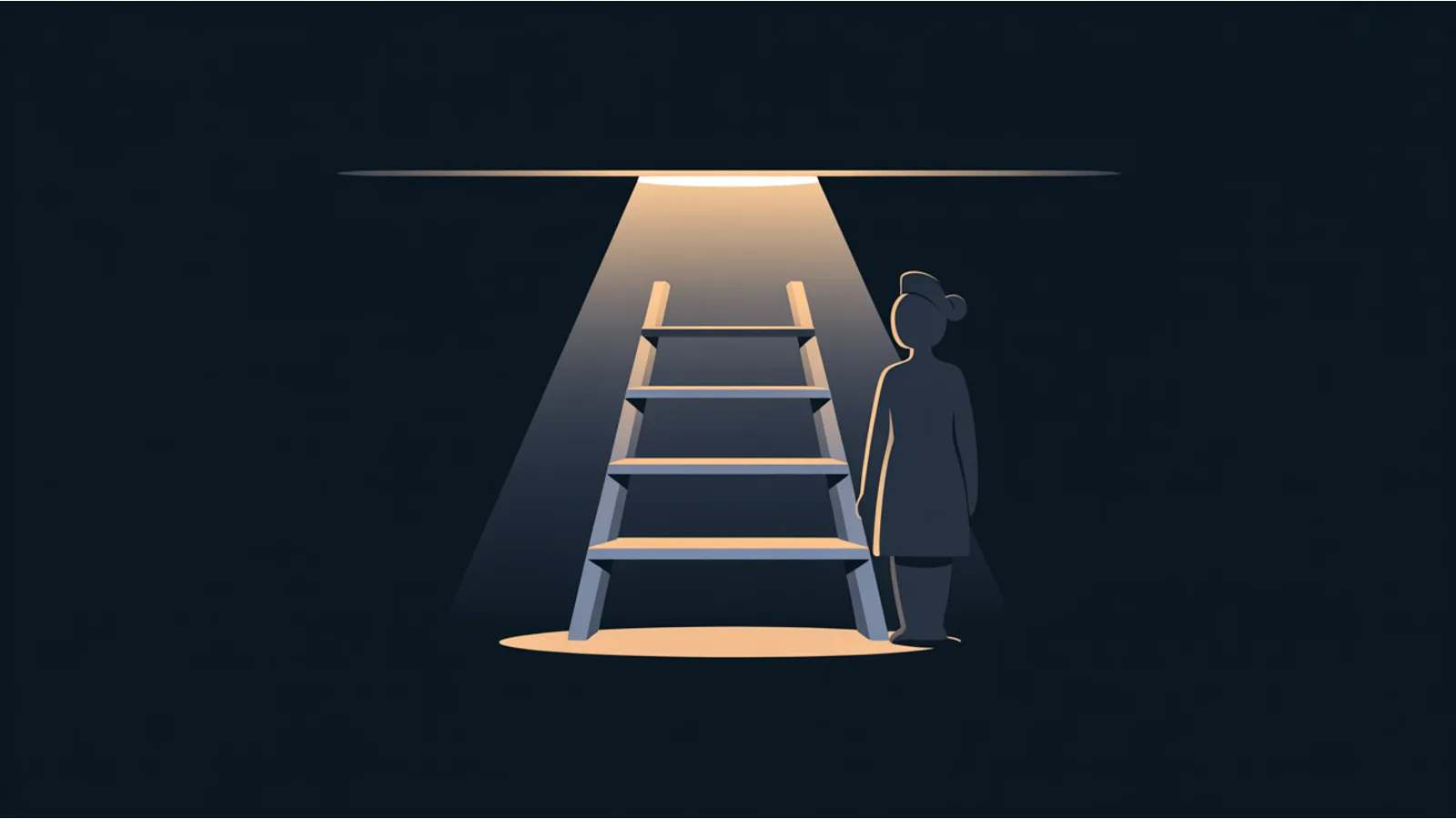
An LPN, called a licensed vocational nurse in California and Texas, sits on the middle rung of a three-step credential ladder. Below is the certified nurse aide. Above is the registered nurse. Each rung has a legal scope of practice, and the LPN's scope has a hard ceiling. No matter how many years of experience a licensed practical nurse accumulates, the license does not permit the independent assessment, care-planning, and medication authority that command a registered nurse's wage. The work that pays more is the work an LPN is not licensed to bill for. The only way to lift the ceiling is to re-credential entirely and become an RN.
Two features make this genuinely worth an article. First, that legal ceiling, and the federal training floor sitting one rung below it. Second, the setting data, which shows that the hospital, the employer the public most associates with nursing, now pays licensed practical nurses the lowest mean wage of any major setting and has nearly designed the role out of its buildings.
What the federal survey actually says
Start with the floor, because it is well measured. In its May 2024 release, the Bureau of Labor Statistics put the median wage for licensed practical and licensed vocational nurses at 62,340 dollars a year, which works out to 29.97 dollars an hour. The bureau counted 651,400 of these jobs nationally, which makes this a very large occupation, though smaller than the more than three million registered nurses covered in the RN entry of this series.
The projected growth is ordinary. BLS forecasts 3 percent growth from 2024 to 2034, which it labels as fast as the average for all occupations, an employment change of about 17,100 jobs. The churn underneath that flat line is the interesting part. The bureau projects roughly 54,400 openings per year on average over the decade, most of them from workers leaving the occupation rather than from new positions. A licensed practical nurse job is far more often vacated than created, which is consistent with the ladder. People do not stay on the middle rung. They leave the field or they climb it.
One honest caveat on currency, and it is the same wall the nurses and miners entries hit. The live BLS wage tables would not open for me, and the most recent detailed table I could read through an archived snapshot is the May 2023 vintage. So the median above and the employment count are the confirmed May 2024 figures from the Occupational Outlook Handbook. The percentile spread and the by-setting pay in the next two sections are the May 2023 figures, and I label them as such. For scale, the median rose from 59,730 dollars in May 2023 to 62,340 dollars in May 2024, so read the older detail as a slightly lower snapshot of the same shape.
Here is the May 2023 wage distribution, annual figures as published:
| Percentile | Annual wage (May 2023) |
|---|---|
| 10th | $45,670 |
| 25th | $50,640 |
| 50th (median) | $59,730 |
| 75th | $67,140 |
| 90th | $77,870 |
| Mean | $60,790 |
The spread is narrow. A licensed practical nurse at the ninetieth percentile earns about 1.7 times what one at the tenth percentile earns, for the same license. Compare that to the roughly two-to-one spread among registered nurses, and to the near-500,000-dollar figures at the top of the harbor-pilot piece. This is a compressed scale. The ceiling in the law shows up as a ceiling in the numbers. There is no ninetieth-percentile stardom tier, because the license does not permit the work that would create one.
The prestige employer pays the least
Now the twist that makes this job worth writing about. The public imagines nurses in hospitals. For licensed practical nurses, the hospital is both the smallest of the major settings and the worst-paying.
By employment share, the workforce lives in long-term care, not acute care. As of 2024, the largest employers of LPNs were:
| Setting | Share of LPN employment (2024) |
|---|---|
| Nursing and residential care facilities | 37% |
| Hospitals (state, local, private) | 16% |
| Home healthcare services | 12% |
| Offices of physicians | 12% |
| Government (excl. state/local education and hospitals) | 6% |
More than a third of licensed practical nurses work in nursing homes and residential care. Only about one in six works in a hospital. And when you look at what each setting pays, the ranking is upside down from what prestige would predict. These are the May 2023 industry means:
| Setting | Mean annual wage (May 2023) | LPN jobs | LPNs as share of that industry's staff |
|---|---|---|---|
| Nursing (skilled nursing) facilities | $63,730 | 171,290 | 12.42% |
| Home healthcare services | $61,050 | 78,100 | |
| General medical and surgical hospitals | $55,380 | 84,870 | 1.49% |
| Offices of physicians | $53,580 | 74,850 |
Read the two bold rows together. The skilled nursing facility, the least glamorous setting, pays licensed practical nurses the highest mean of the major settings, and staffs them heavily, at roughly one in eight of all workers. The hospital pays them the lowest mean of the major settings, about 8,350 dollars a year less, and has made them 1.49 percent of its staff. In a hospital, the licensed practical nurse is a rounding error. In a nursing home, the licensed practical nurse is the floor.
Why the inversion? The hospital is exactly the setting where the scope ceiling bites hardest. Acute care is built around the registered nurse's assessment and care-planning authority and around technology and medication tasks that in many states an LPN cannot perform without extra certification or cannot perform at all. So hospitals have steadily shifted their floors to an all-RN or nearly-all-RN model and pushed the licensed practical nurse workload into settings where the pace is different and the RN-only tasks are less constant. The nursing home, where the resident census is stable and the daily work sits squarely inside the LPN scope, is where the role, and the better relative pay, survived.
One limit I will state plainly. The current low hospital share, 16 percent of licensed practical nurses and only 1.49 percent of hospital staff, is verified in the sources above. But a primary time series documenting the size and trajectory of the decline, the "hospitals designed the role out over decades" claim as a measured trend, is something I could not retrieve at a primary source, so I describe the current snapshot and do not put a number on the slope of the fall.
The credential ladder, and the floor below it
The strange hook of this job is the ladder, so it is worth walking each rung, because the pay ceiling and the pay floor are both set by rules, not by markets.
At the bottom is the certified nurse aide, and this is where a federal rule sets the floor of the whole structure. Under federal regulation, a nurse aide training and competency evaluation program must consist of no less than 75 clock hours of training, including at least 16 hours of supervised practical training. Seventy-five hours. That is the legal minimum to enter the healthcare-worker ladder at all, and it is why the wage floor beneath the licensed practical nurse sits so low. A credential you can earn in a couple of weeks does not command much.
The licensed practical nurse is the middle rung, and the one this article is about. It requires a state-approved practical or vocational nursing program, roughly a year of full-time study, plus a passing score on a national licensing exam. More on the exact hours and exam below.
The registered nurse is the top rung, an associate or bachelor's degree and a harder version of the same exam, and it carries the scope of practice, the independent assessment, the care-planning authority, the fuller medication and IV latitude, that the licensed practical nurse's license does not. That scope is the ceiling. In California, the vocational nurse's own statute writes the subordinate position into law. Vocational nursing there is performed, in the code's words, "under the direction of a licensed physician and surgeon or registered nurse, or naturopathic doctor." The licensed practical nurse does not practice independently. Someone on a higher rung directs the work, and that direction is the legal line the paycheck cannot cross.
There is a concrete, everyday illustration of the ceiling: in California, a licensed vocational nurse must obtain a separate certification to perform intravenous therapy and blood withdrawal, tasks a registered nurse does under the base license. I want to be careful here. That separate-certification requirement is referenced in the authority notes of the state's vocational-nursing regulations, but I could not directly read and quote the exact certification statute text in this session, so I flag it as a well-known feature of California LVN practice rather than quoting a line I did not read. The general point stands regardless: the tasks that pay more are gated behind additional credentials, and past a certain point the only credential that removes the gate is the RN license itself.
What it takes to hold the license
The reader specifically wanted the qualifications alongside the pay, and for the licensed practical nurse the qualifications are the whole story, because they are what the pay ceiling is attached to.
The education. BLS describes the entry-level education as a postsecondary nondegree award, with no prior work experience in a related occupation required and no on-the-job training. In plain terms, you complete a state-approved practical or vocational nursing program, which the bureau says typically takes about 1 year, and then you get licensed. It is not a degree. It is a certificate program.
The exact hour requirement is set state by state, and I could verify only one state's figure at a primary source, so I will give that one precisely and flag the rest as varying. California's regulation requires a vocational nursing program of not less than 1,530 hours, or 50 semester units. Of those, 576 are theory hours, including a minimum of 54 hours in pharmacology, and 954 are clinical hours. That is the concrete shape of "about a year": more than a thousand hours, weighted about two to one toward hands-on clinical work over classroom theory. Other states set their own totals and I did not verify them individually, so treat California's 1,530 hours as one worked example of the national "about 1 year," not as a nationwide figure.
The exam. After the program, every candidate must pass the NCLEX-PN, the national licensing examination for practical nurses, administered by the National Council of State Boards of Nursing. It is not a fixed test. It is a computerized adaptive test that serves between 85 and 150 items, with a maximum time limit of 5 hours, and it stops as soon as it has enough evidence to decide. The passing standard is held at a fixed difficulty level, expressed in the testing world as negative 0.18 logits, through the current cycle. The exam does not ask everyone the same questions. It keeps adjusting difficulty until it can place you above or below the line.
The 2024 results show how sharp that line is. Among first-time, U.S.-educated candidates, 50,570 tested and 44,693 passed, a pass rate of 88.4 percent. But across all candidates the rate drops to 79.1 percent, on 63,150 tested and 49,933 passed. The gap is in the two hardest groups. First-time internationally educated candidates passed at 51.1 percent, and repeat U.S.-educated candidates, the people taking it again after failing, passed at just 41.9 percent. A failed first attempt is a genuine hazard. Fewer than half of repeaters clear it.
The adaptive machinery is visible in the performance detail. Among first-time U.S.-educated candidates in 2024, the average test ran 99 items, 67.8 percent finished at the minimum number of items, and 16.2 percent were pushed all the way to the maximum. The average testing time was 2 hours and 17 minutes, well under the five-hour cap. Most people who pass do so quickly, because the test reaches confidence fast when a candidate is clearly above the line. The ones who get to 150 items are the ones the algorithm keeps hovering near the border.
One forward-looking note. The exam is not static. An updated NCLEX-PN test plan takes effect in April 2026, and it leans further into the Next Generation NCLEX format, measuring clinical judgment through case-study item sets rather than isolated recall questions. I flag the 2026 test-plan details as drawn from the council's published plan document, which I could reference but not fully parse to the exact category percentages, so I describe the direction of the change and do not quote the four Client Needs category ranges.
The renewal. The license is not permanent. California, again as the worked example, requires 30 contact hours of continuing education every two years to renew an active vocational nursing license, a requirement waived only for the very first renewal after initial licensure. The credential has to be maintained, on the clock, for as long as you hold it.
Add it up and the qualification stack is real: on the order of 1,500 hours of state-approved schooling in the one state I could verify, a national adaptive exam that fails one in five candidates and better than half of repeaters, extra certifications to unlock specific clinical tasks, and continuing education to keep the license alive. It is a serious credential. It is also, by law, a capped one.
What a salaried reader should take from this
A legal ceiling on your scope is a legal ceiling on your pay, and effort cannot lift it. This is the cleanest example in the series of a wage set by permission rather than performance. A licensed practical nurse with twenty years of experience still cannot bill for the assessment and care-planning authority reserved to the registered nurse, so the pay compresses into a narrow band, roughly 1.7 to one from tenth to ninetieth percentile. When you evaluate any credentialed job, find the scope-of-practice line before you count the years of experience. If the higher-paying work is legally reserved to a higher credential, seniority will not get you there. Re-credentialing will.
The prestige employer is not always the paying employer. The public pictures nurses in hospitals, and for licensed practical nurses the hospital pays the least of any major setting, about 55,380 dollars, while treating the role as 1.49 percent of its staff. The nursing home, which carries none of that prestige, pays the most and staffs the role heavily. Where a credential is respected is not the same as where it is rewarded. When you compare offers, ask which setting actually needs your exact license doing its core work, because that is the setting that will pay for it.
Watch the floor beneath you, not just the ceiling above you. The reason the licensed practical nurse wage starts where it does is partly the rung below it: a federal rule that lets a nurse aide qualify in as few as 75 hours. An easy-to-enter credential one step down pulls the whole lower part of the scale toward it. In any laddered field, the training length of the rung below you tells you a lot about how much bargaining power your own rung has. A short, cheap credential immediately beneath yours is a weight on your wage.
A capped job can still be a smart on-ramp, if you treat it as one. The churn data says it plainly: about 54,400 openings a year, most from people leaving, against only 17,100 net new jobs. The people who do best on this rung are often the ones who use it as a funded, working step toward the RN license that removes the ceiling. The credential is not a destination in the pay structure. It is a rung, and the structure is built to be climbed. The same lesson runs through the COLA piece: the mechanism that sets your raise matters more than your effort, and here the mechanism is the license itself.
Related reading
- How registered nurses are paid: the rung above, where a patient-safety ratio quietly sets the wage and becoming a temp of your own job is the fastest raise.
- How firefighters are paid: another public-service credential where the schedule, not the base, builds the paycheck.
- How EMTs and paramedics are paid: the other healthcare ladder, where each rung is a license and the pay tracks the scope.
- How coal and metal miners are paid: a graded wage scale built to compress differences rather than reward them.
- COLA versus the merit raise: why the rule that sets your raise matters more than the number you start at.
Fact-check notes and sources
Wage and employment figures come from the federal wage survey. The training hours and continuing-education rule come from California regulation. The exam figures come from the national testing board. The credential floor comes from federal regulation. Where a figure could not be verified at a primary source, it is flagged in the text and here.
- The May 2024 median wage (62,340 dollars a year, 29.97 dollars an hour), total employment (651,400 jobs), the job outlook (3 percent growth 2024 to 2034, employment change of 17,100, about 54,400 openings per year), the typical entry requirements (postsecondary nondegree award, no related work experience, no on-the-job training), the largest employing industries and their shares (nursing and residential care 37 percent, hospitals 16 percent, home healthcare 12 percent, offices of physicians 12 percent, government 6 percent), and the "about 1 year" program length are all from the BLS Occupational Outlook Handbook profile for Licensed Practical and Licensed Vocational Nurses, read via an archived snapshot because the live bls.gov pages would not open for me.
- The wage percentiles (10th 45,670; 25th 50,640; median 59,730; 75th 67,140; 90th 77,870; mean 60,790; mean hourly 29.23; employment 630,250) and the by-setting means (skilled nursing facilities 63,730 mean, 171,290 jobs, 12.42 percent of industry staff; general medical and surgical hospitals 55,380 mean, 84,870 jobs, 1.49 percent of hospital staff; home healthcare services 61,050, 78,100 jobs; offices of physicians 53,580, 74,850 jobs) are the May 2023 BLS Occupational Employment and Wage Statistics for detailed occupation 29-2061, from an archived snapshot of the OEWS table. These are the May 2023 vintage. The live OEWS detailed table would not open for me by any route I tried, and the archived snapshot available is May 2023. The May 2024 median (62,340) and employment (651,400) are confirmed via the Handbook above; the percentiles and per-industry means quoted are the May 2023 figures and should be read as such. For reference, the median rose from 59,730 in May 2023 to 62,340 in May 2024.
- The current low hospital share (16 percent of LPN employment; LPNs at 1.49 percent of hospital staff) is verified in the two BLS sources above. A primary time series documenting the magnitude and trajectory of the decline of LPNs in hospitals over recent decades was not retrieved, so the "hospitals designed the role out" framing is described as a current snapshot and the size of the trend is not asserted as a figure.
- The California vocational nursing curriculum requirement (not less than 1,530 hours or 50 semester units; 576 theory hours including a minimum of 54 in pharmacology; 954 clinical hours) is from California Code of Regulations Title 16, Section 2532, via the Cornell Legal Information Institute. This is one state's exact figure. The Handbook's "about 1 year" is the only national anchor; state clock-hour requirements vary and other states were not individually verified.
- The California continuing-education requirement (30 contact hours every two years for active renewal, waived for the first renewal after initial licensure) is from the California Board of Vocational Nursing and Psychiatric Technicians.
- The California statutory scope of vocational nursing ("under the direction of a licensed physician and surgeon or registered nurse, or naturopathic doctor") is from California Business and Professions Code Section 2859, read via a secondary code host and labeled secondary. The separate California certification for intravenous therapy and blood withdrawal (BPC 2860.5 and the related CCR sections) is referenced in the vocational-nursing regulations' authority notes but the exact certification text was not directly fetched and quoted, so it is described as a known feature rather than quoted.
- The NCLEX-PN exam structure (computerized adaptive test of 85 to 150 items; maximum time limit 5 hours; passing standard held at negative 0.18 logits through the current cycle), the 2024 pass rates (first-time U.S.-educated 50,570 tested, 44,693 passed, 88.4 percent; all candidates 63,150 tested, 49,933 passed, 79.1 percent; repeat U.S.-educated 41.9 percent; first-time internationally educated 51.1 percent), and the 2024 performance detail for first-time U.S.-educated candidates (average test length 99 items; 67.8 percent took the minimum number of items and 16.2 percent the maximum; average testing time 2 hours 17 minutes) are all from the NCSBN 2024 NCLEX Examination Statistics, Tables 12 and 13.
- The federal floor of the credential ladder (a nurse aide training and competency evaluation program must consist of no less than 75 clock hours of training, including at least 16 hours of supervised practical training) is from 42 CFR Section 483.152, via the eCFR.
- The updated NCLEX-PN test plan (effective April 2026, measuring clinical judgment via Next Generation NCLEX case-study item sets) is from the NCSBN 2026 NCLEX-PN Test Plan, whose cover states an April 2026 effective date, labeled secondary. The four Client Needs category percentage ranges of that test plan could not be parsed to exact figures in this session and are not stated.
This post is informational and journalistic, not career, legal, medical, or financial advice. It describes a published federal wage survey, a state regulation and statute, a national testing board's published statistics, and a federal regulation. Wage data, licensing hours, and exam rules change, and several figures are as of 2023 to 2026 as noted, so verify current status before relying on any of them. Mentions of specific agencies, boards, and states are nominative fair use, and no affiliation is implied.
